November 12, 2025
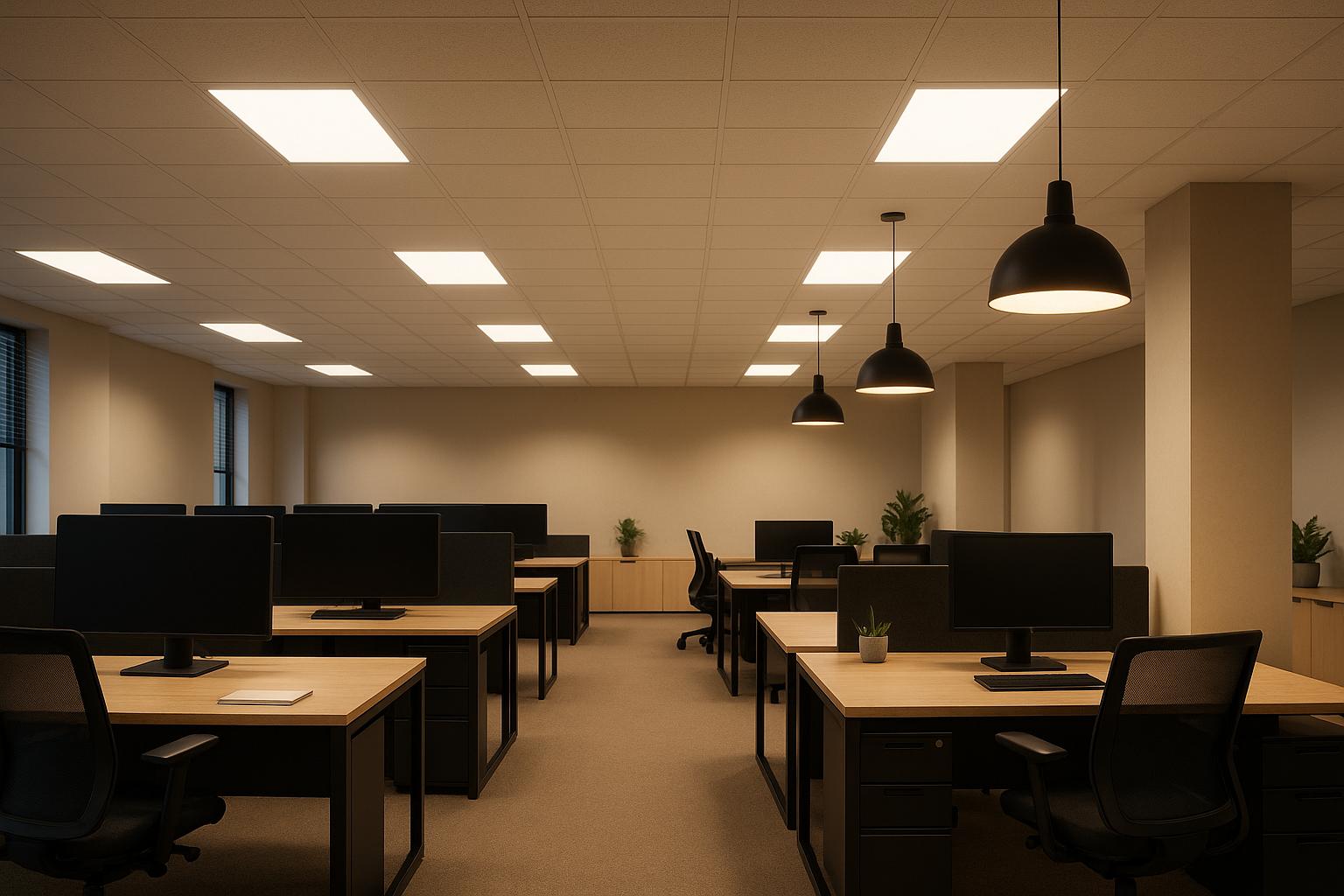
Commercial lighting plays a critical role in reducing energy costs, improving workplace efficiency, and creating a better environment for employees and customers. Switching to LED lighting can save up to 90% on energy use compared to traditional bulbs, with additional benefits like longer lifespans and reduced heat output - especially important for businesses in hot climates like Texas.
Key takeaways:
For a successful upgrade:
Texas Lighting Consultants offers end-to-end solutions, from assessments to installation, helping you save money and meet all regulatory requirements.
Start by identifying the purpose of each area in your business. For instance, office spaces typically need consistent, even lighting, while retail areas benefit from fixtures that highlight products. Spaces where detailed work takes place require higher brightness levels. Also, think about your operating hours - facilities running 24/7 will have different energy demands than those operating only during the day. These details help you estimate energy use and assess whether upgrades, like daylight harvesting systems, might be beneficial.
Take a close look at your existing electrical panels, circuit capacity, and control systems. Older systems may need updates to support modern LED or smart lighting solutions. For spaces with ample natural light, consider installing daylight harvesting systems. These adjust artificial lighting based on the time of day, helping to cut down on energy use.
Once you've evaluated your needs, ensure your lighting design aligns with all necessary safety and regulatory standards.
It’s crucial to follow established codes such as ASHRAE 90.1 and the IECC, which recommend features like automatic controls and occupancy sensors. OSHA and ADA guidelines also require proper illumination levels and glare reduction to ensure safety and accessibility.
Additionally, check for local regulations, especially if you're in Texas. Some cities in Texas may enforce stricter standards or have specific lighting ordinances that go beyond national codes. Verifying these local rules is an essential step in your planning process.
After addressing compliance, the next step is to measure your system’s efficiency using Lighting Power Density (LPD).
LPD is a measure of how much electrical power your lighting uses per square foot of space. To calculate it, divide the total wattage of all fixtures by the area of the space. Transitioning from fluorescent fixtures to energy-efficient LED lighting and incorporating features like occupancy sensors or daylight harvesting can significantly lower your LPD. Lowering your LPD not only reduces energy consumption but may also make you eligible for rebates.
Keep in mind that LPD recommendations vary depending on the type of space. For example, an office using older fluorescent lighting might meet current LPD standards, but upgrading to LEDs can drastically improve efficiency and lower energy costs over time.
LED troffers are a go-to choice for offices and retail spaces. These rectangular fixtures fit neatly into standard ceiling grids, providing even, widespread light. They’re especially handy for spaces with drop ceilings and can replace fluorescent fixtures without requiring major modifications.
High bay LED fixtures are designed for large spaces with ceilings 20 feet or higher. Think warehouses, manufacturing plants, or big-box stores. These fixtures are built tough, delivering powerful downward lighting to cover expansive areas efficiently.
LED downlights are perfect for smaller spaces where both aesthetics and functionality matter. Recessed into the ceiling, they create a clean, modern look while offering focused illumination. You’ll often find these in restaurants, boutique shops, or professional offices.
Linear LED fixtures are ideal for corridors, parking garages, or under-cabinet lighting. Their slim design and ability to connect seamlessly make them a great choice for creating continuous light lines in modern commercial settings.
LED wall packs are the backbone of outdoor commercial lighting. Mounted directly to walls, they illuminate parking lots, walkways, and building perimeters. Built to handle tough weather conditions, they also provide reliable security lighting.
Here’s a quick breakdown of the pros and cons for each type:
| Fixture Type | Energy Efficiency | Lifespan | Initial Cost | Maintenance | Best Applications |
|---|---|---|---|---|---|
| LED Troffers | 35-45 watts per fixture | 50,000+ hours | $75-$200 | Low | Offices, retail spaces up to 400 sq ft per fixture |
| High Bay LEDs | 100-400 watts per fixture | 100,000+ hours | $150-$500 | Low | Warehouses, factories covering 1,000+ sq ft per fixture |
| LED Downlights | 8-25 watts per fixture | 50,000+ hours | $25-$100 | Low | Restaurants, small retail, accent lighting |
| Linear LEDs | 20-60 watts per 4-foot section | 50,000+ hours | $50-$150 | Low | Corridors, under-cabinet, continuous runs |
| LED Wall Packs | 25-100 watts per fixture | 75,000+ hours | $100-$300 | Low | Exterior walls, parking areas, security lighting |
Switching to LEDs can lead to big savings. For example, replacing a 400-watt metal halide fixture with a 150-watt LED can slash energy use by over 60%. This means lower electric bills right away.
LEDs also cut down on maintenance. Where fluorescent tubes might need replacing every 12-18 months, LEDs can last 10-15 years. That’s fewer disruptions and reduced labor costs for replacements.
While the upfront cost of LEDs is higher than traditional fixtures, their long lifespan and energy efficiency often lead to much lower overall costs in the long run.
Choosing the right LED fixtures isn’t just about efficiency - it’s also about meeting Texas standards. The state follows the IECC (International Energy Conservation Code) with some unique modifications, especially for outdoor lighting.
Texas’ intense heat is another factor. LED fixtures must be rated for high ambient temperatures, as summer days often soar past 100°F. Look for models rated to operate at 104°F (40°C) or higher for reliable performance.
Lastly, some Texas utility companies offer rebates for fixtures that exceed standard efficiency levels. To qualify, fixtures often need certifications like DLC Premium or ENERGY STAR Most Efficient. These programs can help offset the higher upfront costs of LEDs, making them an even smarter investment.
Businesses in Texas have a great opportunity to cut down the cost of LED upgrades by leveraging utility rebates and federal tax incentives. Many local utility providers offer rebate programs specifically aimed at promoting energy-efficient lighting upgrades. On top of that, federal programs may provide tax incentives for projects that meet certain energy efficiency standards. To make the most of these benefits, it’s important to consult with local utility providers and stay updated on the latest guidelines. Choosing certified LED fixtures is a key step to ensure eligibility for these programs.
When it comes to qualifying for utility rebates and energy efficiency programs, DLC (DesignLights Consortium) certification is often a must for commercial LED lighting. Many utility rebate programs require this certification, while ENERGY STAR certification also indicates high performance standards. To simplify the process, make sure the fixtures you select are listed on the DLC QPL (Qualified Products List) or carry the ENERGY STAR label. Keep detailed records of these certifications, as proper documentation will make your rebate application process much smoother.
Once you’ve chosen certified products, adding smart lighting controls can take your energy savings to the next level. Features like occupancy sensors, daylight harvesting, and scheduling systems automatically adjust lighting based on usage patterns and available natural light, which helps reduce energy consumption. Centralized control systems also allow for remote monitoring and adjustments, making it easier to optimize energy use. Plus, some utility providers even offer additional incentives for integrating smart lighting systems into your project.
In Texas, commercial lighting projects must align with both state and national standards to ensure safety and energy efficiency. The state follows the 2015 International Energy Conservation Code (IECC) and ASHRAE Standard 90.1-2013, which have been in effect since November 1, 2016. These codes dictate requirements for lighting power density, controls, and energy performance - key factors that influence the selection and installation of fixtures.
The Texas Department of Licensing and Regulation (TDLR) oversees electrical work across the state, ensuring all installations meet strict safety standards. Collaborating with experts can simplify the process of navigating these codes, laying the groundwork for a streamlined and compliant lighting project.
Texas Lighting Consultants offers end-to-end project management, covering everything from initial evaluations to final installations and documentation. As a HUB-certified, woman-owned business, they handle every aspect of your lighting upgrade, including assessments, design, certified installations, and rebate paperwork.
Their process ensures that each phase of your commercial lighting upgrade is seamlessly connected, maximizing both efficiency and compliance. With a single point of contact, communication and coordination become straightforward. They handle the complexities of code compliance while keeping your project on time and within budget. The documentation provided includes compliance certificates, warranty details, and rebate application materials, which are invaluable for future maintenance, warranty claims, or audits. Their certified installation process guarantees that all work meets required codes, ensuring a smooth and compliant upgrade.
Certified installation is the cornerstone of a safe and energy-efficient lighting system. By working with certified professionals, you ensure that your project meets all safety and performance standards while qualifying for available incentives. State-licensed and OSHA-certified electricians bring the expertise needed to manage complex commercial installations with precision and care.
These professionals maintain state licensing, OSHA certifications, and LEED standards, ensuring that your system is not only compliant but also optimized for safety and efficiency. They understand how to select and install the right fixtures and light levels to meet code requirements while prioritizing employee safety. Additionally, certified installers are well-versed in Texas utility incentive programs, helping your project qualify for rebates and maximizing its financial benefits.
Choosing the best commercial lighting for your business involves a thoughtful approach that balances energy savings, compliance with regulations, and cost considerations. Start by conducting a thorough lighting assessment to evaluate your current energy consumption and identify areas where switching to LEDs can make the biggest difference.
Prioritize LED fixtures that align with your business needs while adhering to energy codes. Pay attention to details like color temperature, fixture compatibility, and the potential for integrating smart controls. Evaluate your return on investment (ROI) by factoring in energy savings, utility rebates, and available tax incentives.
To ensure everything is installed correctly and meets safety standards, work with experienced professionals. This ensures compliance with regulations and proper documentation. By following these steps and consulting with experts, you can make the transition to energy-efficient lighting smoother and more effective.
Thinking about upgrading your lighting system? Texas Lighting Consultants makes it simple with a comprehensive, start-to-finish approach. As a HUB-certified, woman-owned business, they specialize in navigating Texas utility rebate programs and ensuring all regulatory requirements are met.
Start with a detailed lighting audit to uncover savings opportunities and estimate your ROI. Their team handles every stage of the process, from selecting energy-efficient fixtures to maximizing rebates and tax credits. Professional installation guarantees your system performs as expected, with ongoing maintenance support to protect your investment.
Get in touch with Texas Lighting Consultants today to schedule your lighting assessment and see how much you could save with an expertly managed LED upgrade.
LED lighting brings a host of benefits for businesses operating in hot climates like Texas. One standout advantage is that LEDs produce far less heat than traditional lighting options. This reduced heat output eases the burden on air conditioning systems, helping to cut down on cooling costs.
Another big plus is their energy efficiency. LEDs use less electricity while delivering equal or even better lighting quality. This translates to lower energy bills and a step toward more eco-friendly operations. Over time, these savings can add up, making a real difference for businesses aiming to keep expenses under control.
To make sure your lighting systems meet both local and national regulations, start by checking the relevant building codes, energy efficiency requirements, and safety standards in your area. These guidelines can influence everything from the types of fixtures you’re allowed to use to how they’re installed and how much energy they consume.
Keep an eye out for certifications like UL, ETL, and DLC. These labels show that a product meets established safety and efficiency criteria. Plus, they can help your business qualify for energy rebate programs, which can lower your upfront costs. If you're unsure about anything, it's a smart move to consult a qualified lighting professional. They can help ensure your system not only complies with regulations but also optimizes energy savings.
Upgrading to LED lighting can qualify you for utility rebates and federal tax incentives, but it’s important to know where to start. Begin by reaching out to your local utility provider to see if they offer rebates for energy-efficient upgrades. Many utilities encourage energy savings by providing incentives for installing LED fixtures or smart lighting systems that help cut down on energy use.
When it comes to federal tax incentives, take a closer look at programs like the Energy-Efficient Commercial Buildings Deduction (Section 179D). These programs often have specific energy-efficiency standards you’ll need to meet. Partnering with a qualified lighting consultant can ensure your upgrade aligns with these requirements.
Don’t forget to keep all your paperwork - receipts, installation records, and any other relevant documentation. These will be essential when applying for rebates or claiming tax deductions. To make sure you’re getting the most out of these benefits and staying compliant with all the rules, consider consulting a tax professional. They can guide you through the process and help you maximize your savings.
We’re a HUB-certified Texas lighting company specializing in surveys, calculations, and installations for government and contractor projects.
© 2025-26 | Texas Lighting Consultants | All Right Reserved.