December 12, 2025
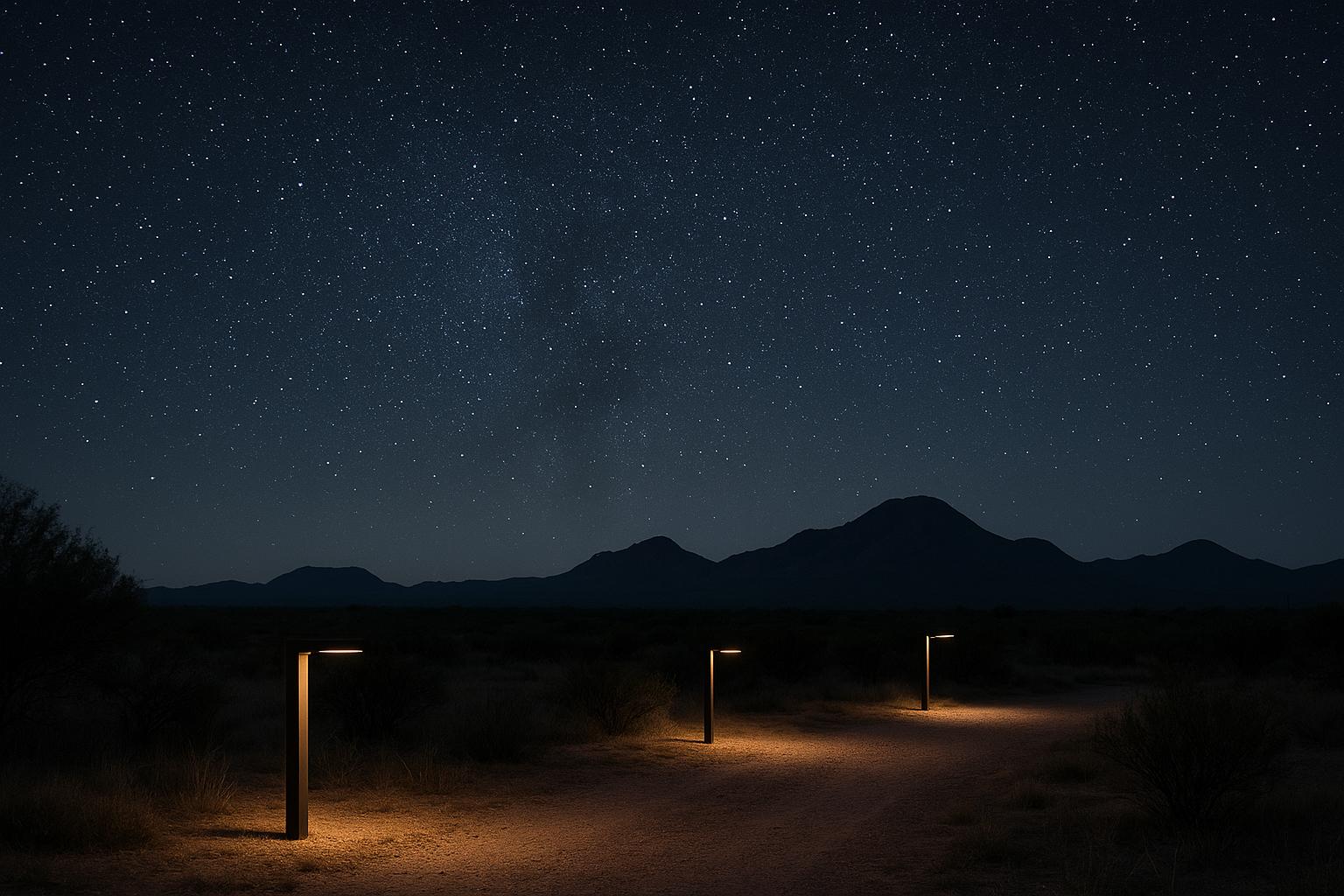
Texas is leading efforts to protect its night skies from light pollution through Dark Sky regulations. These rules aim to reduce wasted energy, cut costs, and preserve the state's natural beauty for stargazing and astro-tourism. Key points include:
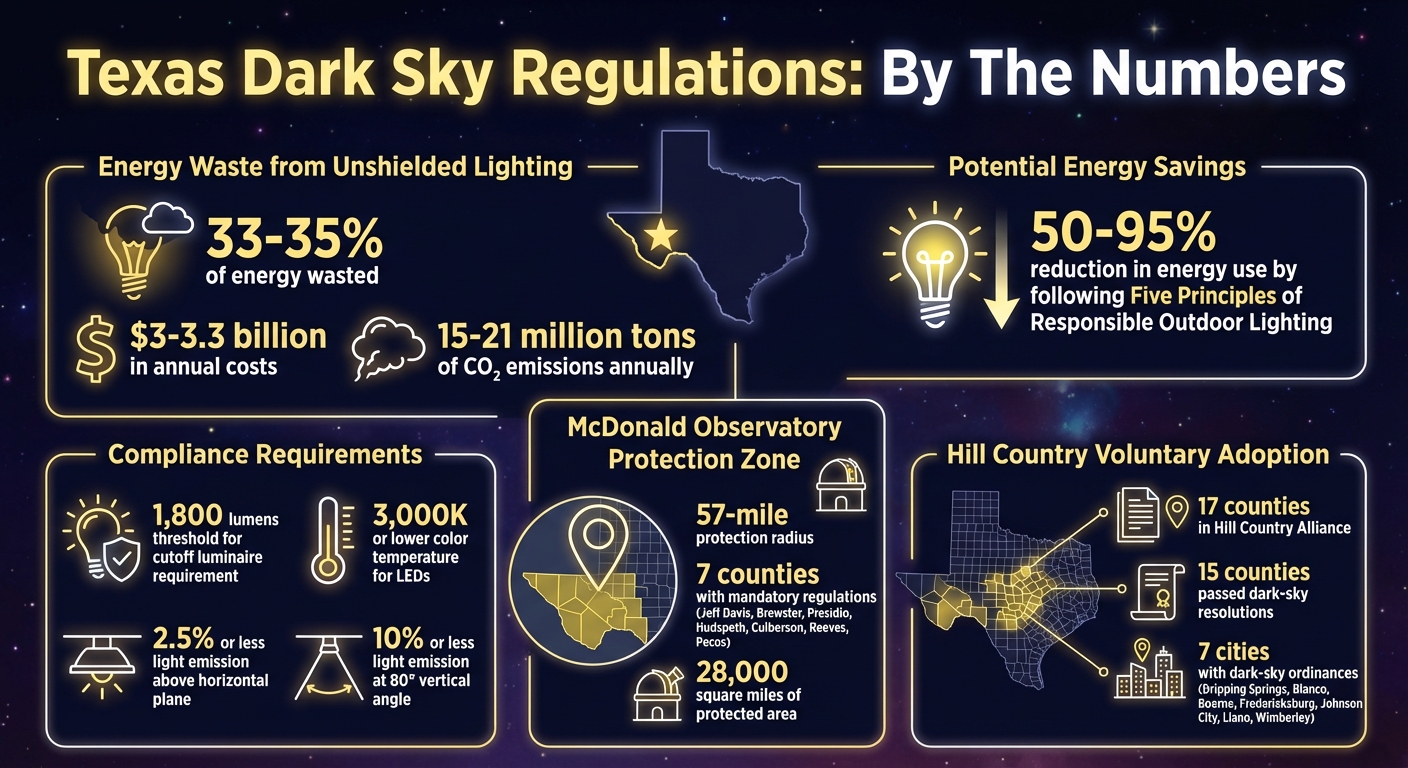
Texas Dark Sky Lighting: Energy Waste and Savings Statistics
The Texas Health and Safety Code, Chapter 425, outlines dark sky standards specifically for state-funded facilities, while local municipalities handle additional rules and regulations to address their unique needs.
State-funded facilities are required to use cutoff luminaires for fixtures emitting more than 1,800 lumens. The law defines this type of luminaire as follows:
"Cutoff luminaire" means a luminaire in which 2.5% or less of the lamp lumens are emitted above a horizontal plane through the luminaire's lowest part and 10% or less of the lamp lumens are emitted at a vertical angle 80 degrees above the luminaire's lowest point."
This design ensures that light is directed downward, reducing skyglow and light pollution. Even temporary lighting for special events must comply with shielding requirements to limit upward illumination. Additionally, outdoor lighting for state-funded projects must provide only the minimum brightness necessary for its purpose, adhering to nationally recognized standards.
These shielding requirements are a foundation for understanding how local lighting regulations further refine these principles.
Texas takes a decentralized approach to lighting zone classifications. Instead of enforcing a unified statewide system, the state sets basic standards for projects it funds, leaving most regulatory decisions to local municipalities and certain counties. This results in significant variation across the state, as communities tailor their lighting requirements based on zoning districts and property types.
Some municipalities have chosen to align with guidelines from the International Dark-Sky Association, while others have developed their own standards to address local needs.
With these zoning variations in mind, it's important to consider how rules for signage and illumination come into play for state-funded projects.
State-funded projects are required to prioritize energy efficiency, reduce glare, and minimize light pollution. When it comes to lighting on state highways, the Texas Department of Transportation must first evaluate whether passive safety measures - like reflective road markers or signs - can achieve the intended purpose before resorting to traditional lighting installations.
Certain exemptions are allowed, including cases of federal preemption, emergency lighting, or situations where safety concerns are deemed critical.
Across Texas, outdoor lighting regulations vary by municipality and county, with some areas enforcing stricter measures to preserve dark skies. These local rules are particularly important in regions like the McDonald Observatory protection area and the Hill Country, where they reflect a balance between statewide standards and regional needs.

In 2011, Governor Perry signed legislation (HB 2857) establishing a 57-mile protection zone around the McDonald Observatory in West Texas. This law empowers seven counties - Jeff Davis, Brewster, Presidio, Hudspeth, Culberson, Reeves, and Pecos - to regulate outdoor lighting within their boundaries. All seven counties, along with their cities, have adopted outdoor lighting ordinances, creating a 28,000-square-mile area with mandatory dark-sky protections. These rules are specifically designed to support the observatory's astronomical research. Noncompliance can lead to criminal and civil penalties.
Businesses operating in this zone must use fully shielded fixtures that direct light downward. Additionally, local ordinances require permits for outdoor lighting installations. It’s worth noting that recent state legislation restricts municipal lighting regulations, except in areas surrounding major observatories and military sites.
Unlike the mandatory protections around the McDonald Observatory, the Hill Country has embraced voluntary dark-sky measures. Many cities and counties in this region have implemented their own lighting codes, often pursuing International Dark-Sky Association (IDA) accreditation. Cities such as Dripping Springs, Blanco, Boerne, Fredericksburg, Johnson City, Llano, and Wimberley have adopted dark-sky ordinances. Additionally, the Hill Country Alliance, representing 17 counties, reports that 15 member counties have passed resolutions supporting dark-sky initiatives.
These local rules typically require outdoor lighting to have a correlated color temperature of 3,000 Kelvin or less and to use fully shielded fixtures that prevent light from spilling beyond intended areas.
Businesses planning lighting installations or upgrades should verify local requirements beforehand. For expert advice, Texas Lighting Consultants (https://texaslightingconsultants.com) offers guidance on dark-sky compliant solutions tailored for Texas.
Meeting compliance standards isn't just about following the rules - it's also a way to help preserve Texas's iconic starry skies. It's important to know that Texas Dark Sky regulations can vary widely depending on your location. Local ordinances might be stricter than state requirements, so researching the specific rules for your area is a critical first step. For facilities receiving state funding, there's an additional requirement: any new or replacement outdoor lighting fixtures with a rated output exceeding 1,800 lumens must be cutoff luminaires. This sets the standard for choosing and installing the right fixtures.
Once you understand the local requirements, you can move on to selecting fixtures that meet these standards.
Start with fully shielded fixtures. These are essential for reducing light trespass and minimizing sky glow, as they emit no light above the horizontal plane. In fact, for fixtures producing more than 1,500 lumens, full shielding is often required. Look for labels like "cutoff" or "full cutoff" luminaires - these ensure the light is directed downward where it’s needed, rather than spilling upward or sideways.
Pay attention to color temperature. Warm-toned LED lights with a Correlated Color Temperature (CCT) of 3,000K or lower are preferred. Cooler, blue-toned LEDs can brighten the night sky more, making them less suitable for dark-sky compliance. In fact, many municipalities in the Hill Country explicitly require lighting to stay at or below 3,000K for this reason.
LED lighting offers a practical way to meet compliance requirements while also cutting energy costs. Modern LED fixtures are available in dark-sky compliant designs, featuring proper shielding and warm color temperatures. They also provide excellent directional control, ensuring light is focused precisely where it’s needed. This precision aligns with the "Five Principles of Responsible Outdoor Lighting", which emphasize using the right amount of light and directing it appropriately.
Keeping thorough records is crucial for passing inspections. Businesses should create a detailed outdoor lighting plan, ideally with the help of a lighting designer or engineer, to submit with permits and for verification purposes. For instance, in Heath, Texas, non-residential properties must provide a comprehensive lighting plan that includes:
It's also wise to maintain permits, a Lighting Plan Checklist, a Lumen Compliance Workbook, and any related assessments. Use tools like inventory spreadsheets and data collection sheets to track fixture specifications and ensure everything is up to date. This level of documentation demonstrates a strong commitment to meeting Texas's dark-sky standards.
For businesses needing professional guidance, working with experts like Texas Lighting Consultants can make the process smoother. As a HUB-certified, woman-owned firm, they specialize in lighting assessments, LED retrofits, and installation support. Their expertise ensures your outdoor lighting aligns with both state and local Dark Sky requirements.
Adopting Texas Dark Sky regulations brings both financial and environmental perks by addressing energy waste. Unshielded lighting is a big culprit, wasting around 35% of energy - costing about $3 billion annually. By following the Five Principles of Responsible Outdoor Lighting, energy use can drop by an impressive 50% to 95%.
These energy savings can directly improve net operating income. Replacing unshielded fixtures with fully shielded ones allows for lower wattage bulbs, while smart controls like timers and motion detectors help trim utility bills. On top of that, longer-lasting LED fixtures reduce maintenance costs over time. Beyond the financial benefits, better lighting also enhances safety and creates a more pleasant experience for everyone.
Dark sky compliance doesn’t just save money - it improves safety and property appeal. By reducing glare and enhancing nighttime visibility, it creates a safer environment for visitors and employees. David Hakimi, Principal at Alcon Lighting, explains:
"We carefully balance the need for sufficient lighting for safety and security with the goal of minimizing excessive light pollution".
The advantages don’t stop there. Meeting dark sky standards also aligns with environmental and corporate governance goals. Cutting down on the 15 million tons of wasted CO₂ emissions from outdoor lighting showcases environmental responsibility. Plus, businesses can gain public recognition, like the "Be A Star Award" from DarkSky Texas, for their efforts.
Texas Dark Sky regulations offer a smart blend of energy savings, cost efficiency, and environmental care. By adopting fully shielded fixtures, sticking to warm-toned lighting at 3,000K or below, and following the Five Principles of Responsible Outdoor Lighting, businesses can not only meet compliance requirements but also create safer and more visually appealing environments for employees and visitors.
The financial benefits are hard to ignore. With 30% of outdoor lighting wasted due to unshielded fixtures - resulting in $3.3 billion in unnecessary costs and 21 million tons of CO₂ emissions annually - switching to directed, lower-wattage LED solutions can significantly cut waste and reduce maintenance expenses. These savings underscore the importance of understanding and adhering to local regulations.
Local ordinances across Texas add another layer of influence on outdoor lighting practices. Rules vary, from the strict protections near McDonald Observatory to updated codes in places like Dripping Springs. The 2022 Texas Model Outdoor Lighting Ordinance provides a reliable framework that aligns with International Dark-Sky Association standards. As DarkSky Texas puts it, "You will see better; save money; feel safer; and enjoy Nature, Neighbor & Night-Skies Friendly Lighting!".
For businesses in the Hill Country, embracing dark sky practices reflects both environmental responsibility and sound financial planning. It demonstrates a commitment to preserving the region's natural beauty, which attracts visitors eager for stargazing and outdoor adventures.
Taking action now ensures your business stays ahead of evolving regulations while reaping immediate operational gains. Whether you're constructing new facilities, upgrading outdated fixtures, or aiming to lower utility costs, aligning with Dark Sky standards is a practical step that benefits both your business and the community.
Warm-toned LEDs, with a color temperature of 3000K or lower, are an excellent option for outdoor lighting. They help reduce glare, limit light spilling into unwanted areas, and play a key role in minimizing light pollution. These qualities make them a perfect fit for meeting Texas Dark Sky regulations while maintaining the beauty of the natural nighttime environment.
Switching to warm-toned lighting not only creates a more comfortable and inviting atmosphere but also improves energy efficiency. Plus, it supports ongoing efforts to preserve dark skies in your community, ensuring a better balance between lighting needs and environmental care.
To meet Texas Dark Sky regulations, businesses should opt for fully shielded, downward-facing light fixtures. This design helps cut down on light pollution and glare, ensuring a clearer night sky. Adding timers, motion sensors, and dimmers is another smart move, as these tools help manage lighting efficiently and avoid wasting energy. Don’t overlook regular maintenance - keeping fixtures in good condition ensures they work as intended and stay within compliance.
It's also a good idea to follow the Five Principles of Responsible Outdoor Lighting: make sure lighting is useful, directed where needed, kept at low levels, well-controlled, and uses warm-colored tones. Lastly, stay up to date on local ordinances, which may include specific rules about brightness or fixture types, to ensure you're meeting all requirements.
Using shielding for outdoor lighting ensures that light is directed downward, cutting down on glare, light trespass, and skyglow. This not only reduces light pollution but also helps preserve the natural night sky, making it easier to stargaze and maintain a healthy balance in local ecosystems.
Shielding also boosts energy efficiency by focusing light exactly where it’s needed, improving visibility while cutting down on wasted energy. It’s a straightforward solution that aligns with Texas Dark Sky regulations and supports responsible lighting practices.
We’re a HUB-certified Texas lighting company specializing in surveys, calculations, and installations for government and contractor projects.
© 2025-26 | Texas Lighting Consultants | All Right Reserved.