December 13, 2025
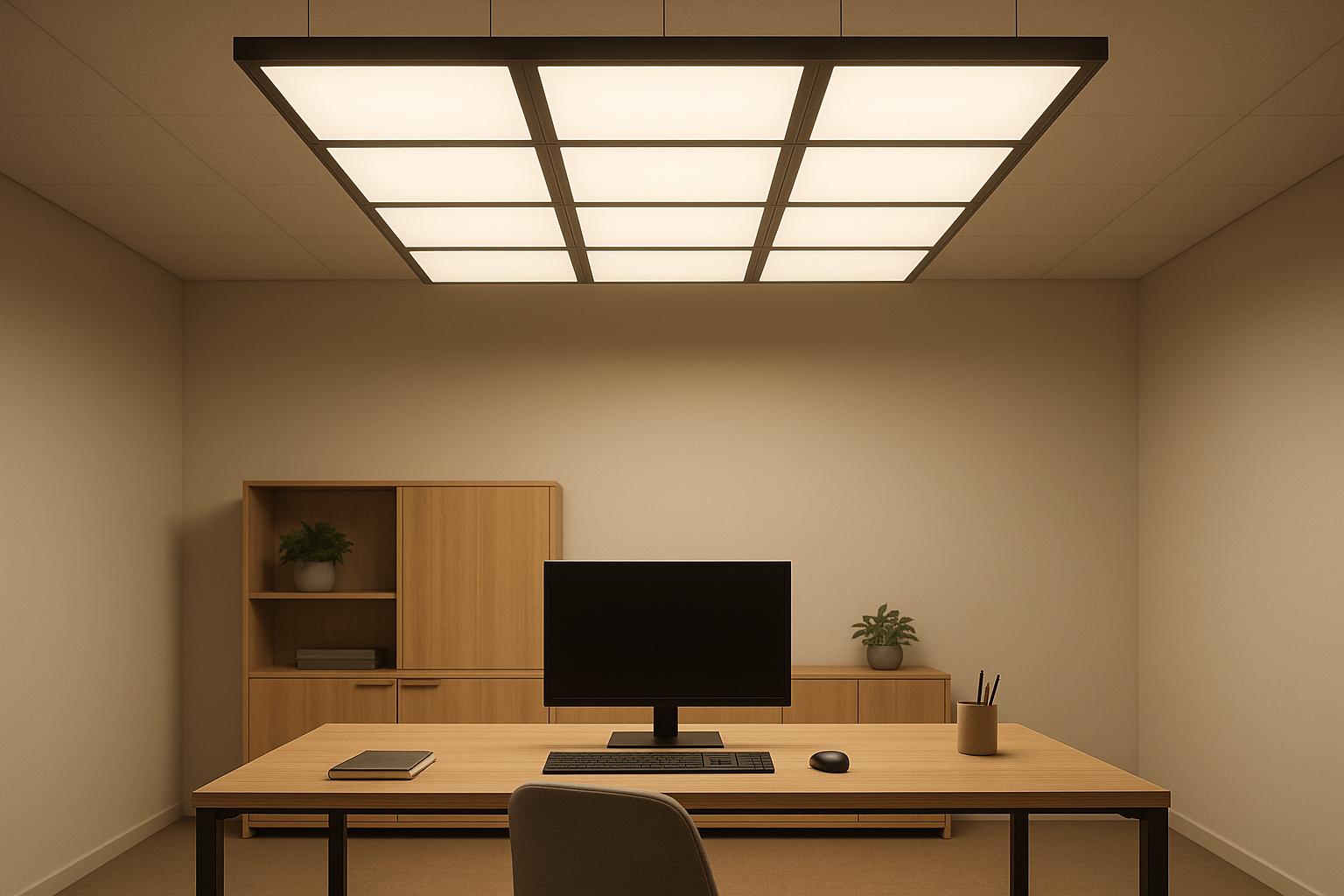
Monitoring your lighting system's performance can save energy, reduce costs, and improve lighting quality. Here's how it works:

4-Step Process for Monitoring Lighting System Performance
Keeping tabs on your lighting system starts with focusing on metrics that measure both energy efficiency and visual performance. By tracking the right data, you can turn numbers into meaningful insights. Performance metrics provide a consistent way to gauge energy use in commercial buildings, helping you confirm the success of energy-saving measures and uncover areas for improvement. Let’s dive into the key metrics that matter most.
The backbone of any lighting performance review is understanding light output and energy efficiency. Luminous efficacy, measured in lumens per watt, reveals how much visible light your system generates for each watt of electricity it uses. The higher the number, the more efficient your system - essentially, you’re getting more light for less energy. To ensure accurate comparisons, measure energy consumption and illuminance levels both before and after making adjustments. While efficiency is critical, don’t overlook visual quality metrics that paint a fuller picture of performance.
Brightness alone doesn’t guarantee visual comfort. CRI measures how well your lighting reproduces colors, with values up to 100 indicating near-perfect accuracy compared to natural sunlight. For most commercial applications, Energy Star recommends a CRI above 80, with an R9 value (important for red tones) greater than zero. In environments requiring precise color accuracy, aim for a CRI above 90 and an R9 over 60.
CCT, on the other hand, describes the color tone of light, ranging from warm yellowish hues (around 2,000K) to cool bluish daylight tones (up to 6,500K). Studies from the U.S. Department of Energy show that tunable lighting - where CCT can be adjusted - improves comfort and alertness in healthcare settings, with similar benefits now being applied in offices and schools. These metrics are key to ensuring both occupant satisfaction and productivity.
Electrical efficiency and temperature control can reveal hidden issues in your system. Advanced controls, such as occupancy sensors or daylighting adjustments, add complexity to performance monitoring because operating hours and light levels often fluctuate. To get reliable data, use tools with ±1–3% accuracy and monitor conditions for at least two weeks. Longer measurements may be needed for systems with daylighting controls, as seasonal changes can affect performance. Keeping an eye on these factors ensures your lighting system remains efficient and dependable over time.
To effectively track lighting performance, you need the right tools to gather accurate data. Power analyzers and energy loggers are essential for measuring real-time energy consumption, while power meters provide true power readings with a precision of ±3% during baseline assessments. Look for meters with built-in power factor calculations and sampling rates of at least 240 Hz. These devices not only validate cost-efficiency but also help identify energy-saving opportunities across your facility.
Thermal imaging cameras play a crucial role in spotting inefficiencies by identifying thermal hotspots in LED components. Additionally, thermal stress testing evaluates how lighting systems perform under high temperatures and extended use. Tracking forward voltage variation (ΔVF) during these tests reveals the durability of LED components - stable readings suggest solid construction. To further enhance monitoring, consider integrating these tools into a unified platform.
Integrated IoT platforms bring sensors, controls, and fixtures together in one dashboard. These systems allow you to visualize light points, energy usage, and occupancy patterns, enabling better analysis of historical data to improve operational efficiency. When it comes to emergency lighting, IoT systems with mesh networking simplify remote testing, allow monitoring of multiple locations, and generate compliance reports for ICC and NFPA standards. This centralized approach ensures your lighting system operates efficiently and meets regulatory requirements. For more advanced control, SCADA systems take monitoring to the next level.
SCADA platforms like Ignition Power Monitoring Software act as central hubs, connecting intelligent electronic devices through standard protocols such as IEC 61850, DNP3, Modbus, and BACnet. These platforms enable monitoring and control through customizable dashboards, offering a powerful solution for managing complex installations.
When choosing monitoring tools, ensure their spectral response aligns with your specific application. For example, day/night detection should match the human eye's photopic response while effectively rejecting infrared interference. Consider environmental factors and operating conditions to guarantee reliable performance. If you're working with battery-powered systems, opt for low-power sensors to extend battery life and minimize operational costs.
Start by documenting the essential details: fixture types, wattage, controls, operating hours, and any problem areas in your facility. Take note of specific zones that require attention, and measure illuminance levels on key surfaces like desks, workbenches, and hallways to establish your starting point. This baseline will serve as your reference for tracking improvements and calculating ROI.
Compile a detailed fixture inventory and lifecycle analysis to understand your equipment's current state and anticipate replacement needs. Record operating hours, as they directly influence energy usage patterns. For added clarity, take photos of electrical panels and fixture positions to use as visual references.
Once you've established a clear baseline, the next step is to set up monitoring systems for real-time data collection.
Bring in certified electricians to install the necessary monitoring equipment. Use energy loggers and CT systems at your electrical panels to measure real-time power consumption. For systems equipped with occupancy sensors and daylight dimming controls, continuous energy monitoring over time provides more accurate insights than one-time measurements.
Place monitoring equipment in stable, undisturbed locations. Install illuminance meters in representative areas to track light levels consistently. Allow the equipment to remain undisturbed for at least two weeks to capture typical business patterns, avoiding periods like holidays or unusual events.
Proper installation ensures reliable data collection, which is crucial for analyzing trends in the next step.
Dive into the collected data to pinpoint energy-saving opportunities. When assessing control systems, measure the power draw at full capacity with automatic controls turned off for both the old and new systems. This helps separate savings from controls versus savings from technology upgrades, such as switching to LED fixtures.
For areas with daylighting controls, account for seasonal variations by using the ratio of total annual solar radiation to the solar radiation during your measurement period, then multiply this by your measured energy use. If your system uses multiple control layers - like occupancy sensors combined with daylighting - measure at least two weeks with each layer operating separately to evaluate their individual contributions. Be sure to include night and weekend data to capture the full picture of usage.
Use the insights from your data analysis to develop a proactive maintenance plan. Compare current performance metrics against your baseline to identify any performance drops early. Schedule inspections and thermal imaging scans to detect stress in components before they fail. Replace lamps based on runtime data rather than fixed schedules. This approach allows you to shift to predictive maintenance, reducing costs and preventing unexpected failures. Your monitoring system provides the evidence needed to make informed decisions and optimize system reliability.
Performance monitoring transforms lighting from just another expense into a valuable asset. According to DOE reports, energy savings from such initiatives range between 20–60%, while occupancy sensors alone can slash lighting usage by up to 50%. These aren’t just numbers - they reflect measurable savings and operational efficiency gained through consistent tracking and informed decision-making.
Beyond cost savings, monitoring ensures lighting quality, which directly impacts safety, productivity, and well-being. Studies highlight a 4.5% boost in productivity, fewer errors, and even reduced sick days. With lighting typically consuming 15–20% of electricity in commercial buildings, it’s easy to see why continuous monitoring is a smart investment, both financially and operationally.
The process involves four key steps - baseline assessment, system installation, data analysis, and scheduled maintenance. This structured approach, combined with rebates covering 25–50% of upgrade costs and LED fixtures lasting over 50,000 hours, not only offsets upfront expenses but also extends equipment lifespan while minimizing maintenance needs. Together, these strategies provide a solid foundation for efficient and effective lighting solutions.
Texas Lighting Consultants is here to bring these benefits to life with expert, end-to-end solutions for lighting performance monitoring. As a HUB-certified, woman-owned company with over 30 years of experience, we manage every aspect of your project - from initial assessments to system design and ongoing support. Using tools like AGI32 and REVIT, we craft photometric designs tailored to your specific needs.
Our team also integrates advanced networked controls for seamless monitoring and handles the often-complicated processes of rebate assistance and compliance documentation. This ensures you not only maximize incentives but also meet all safety and regulatory standards. Whether you’re installing your first monitoring system or upgrading an existing one, we specialize in delivering smooth implementation, dependable data collection, and the best return on your lighting investment.
IoT platforms bring a host of advantages to monitoring lighting systems, starting with real-time data collection. This feature allows you to instantly track energy usage and system performance, giving you the tools to make informed decisions and address issues quickly.
Another key benefit is predictive maintenance. With IoT, you can spot potential problems before they escalate, minimizing downtime and cutting repair costs. These platforms also enhance energy efficiency and simplify system control, which can significantly reduce operational expenses while boosting the overall effectiveness of your lighting setup. In short, IoT technology helps keep your lighting systems efficient, reliable, and cost-conscious.
Thermal imaging cameras are excellent for spotting hot spots, electrical problems, and potential failures in lighting systems. Catching these issues early allows for timely maintenance, helping to avoid wasted energy and minimizing safety risks.
Using this method enhances the performance of your lighting systems, prolongs their lifespan, and ensures they run efficiently. Routine checks with thermal imaging can lead to energy savings while keeping your lighting setup safer and more dependable.
When creating a maintenance schedule for your lighting systems, it’s essential to keep certain priorities in mind. Pay close attention to the equipment's condition, energy consumption patterns, and past maintenance records. Regular assessments of system performance, adherence to energy regulations, and input from occupants about lighting quality can provide valuable insights.
Also, consider how accessible your lighting systems are for inspections or repairs. A clear and organized maintenance plan not only keeps your systems running efficiently but also minimizes downtime and helps them last longer.

We’re a HUB-certified Texas lighting company specializing in surveys, calculations, and installations for government and contractor projects.
© 2025-26 | Texas Lighting Consultants | All Right Reserved.