January 12, 2026
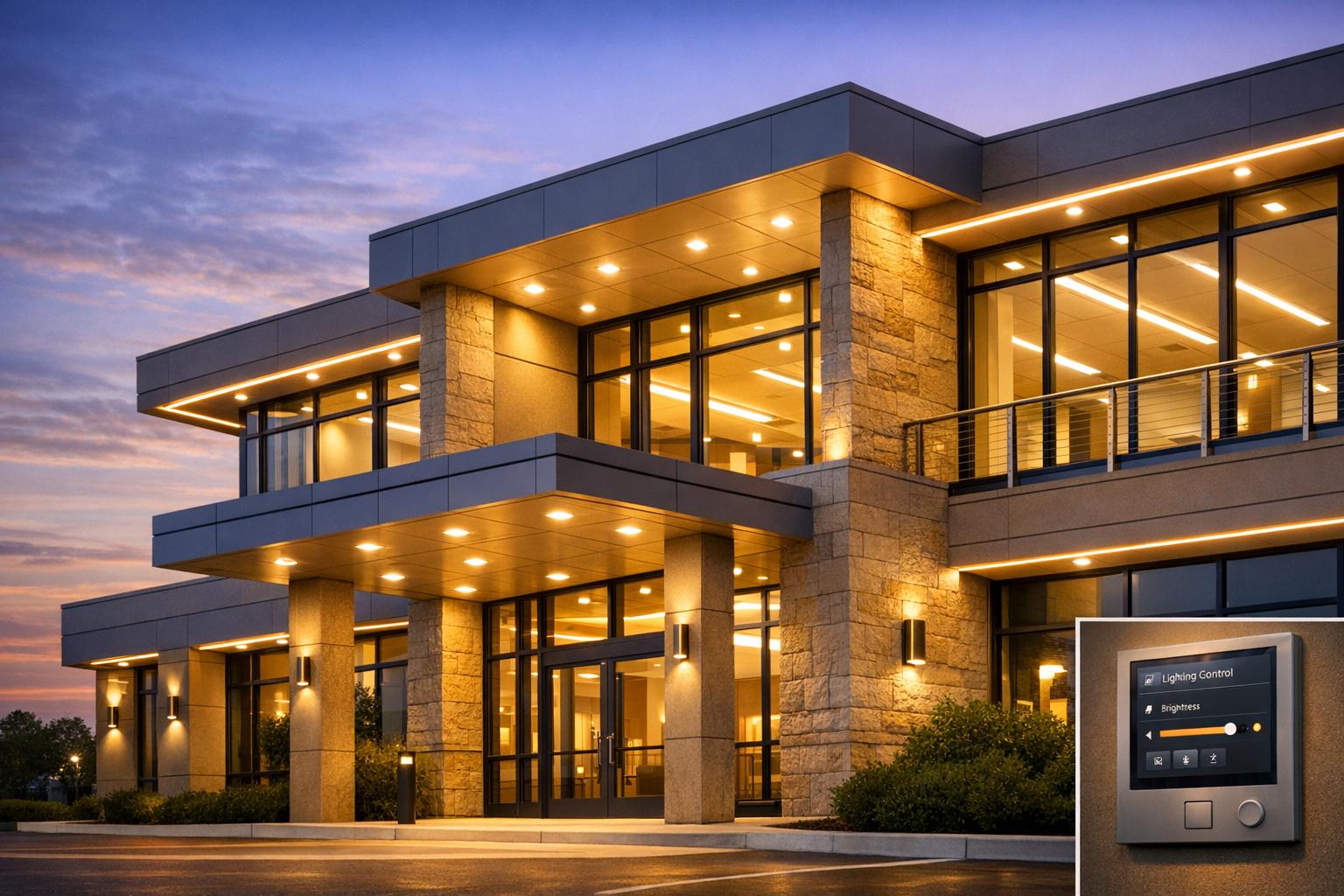
Switching to LED lighting is a smart move for commercial and municipal buildings in the U.S. It cuts energy use, lowers costs, and improves lighting quality. LEDs reduce electricity consumption by 20–60%, last over twice as long as fluorescents, and eliminate hazardous materials like mercury. For example, replacing 11,800 fluorescent fixtures at the New Carrollton Federal Building slashed energy use by 82% and saved $237,500 annually.
To ensure a smooth and efficient LED retrofit, follow these steps:
LED retrofits not only cut costs but also help meet energy codes and reduce environmental impact. Partnering with experts like Texas Lighting Consultants ensures your project is efficient, compliant, and well-executed.
Before diving into a large-scale LED retrofit, it’s essential to plan carefully. A solid plan not only avoids expensive errors but also ensures you meet your energy-saving goals. The level of detail required in your planning depends on the size and complexity of the project. For example, facilities larger than 10,000 square feet or those with multiple fixture types and advanced control needs require a more in-depth evaluation. Start by reviewing your current lighting systems, setting clear energy objectives, and deciding on the best implementation strategy.
A key step in the planning phase is auditing your existing lighting systems. The scope of this audit depends on your project’s needs. For smaller projects, a basic self-survey might be enough to estimate costs. However, for large-scale retrofits, a detailed lighting audit is necessary. This involves technicians inspecting a sample of fixtures to document lamp and ballast configurations. For highly complex projects, a full electrical audit - though more expensive, costing up to $40,000 per location compared to around $5,000 for standard audits - may be required to trace wiring and emergency systems.
"A quality audit will give you a better handle on the expected project cost and return on investment... minimizing surprises when it's time to install." - Dustin Conley, Regency Supply
During the audit, your team should gather detailed, room-specific information, such as the number of fixtures, voltage, housing types, and ballast configurations. Older ballasts (over five years) may need replacing since they likely won’t outlast the new LEDs. Additionally, measure light levels in foot-candles to identify areas that are over-lit, where reducing fixture counts or wattages can save energy. Don’t forget to inspect ceiling plenums for hazardous materials like asbestos or PCBs in older ballasts, as these can complicate installation timelines and increase costs. For complex projects, expect audits to take four to six weeks to complete.
Use the data from your audit to set achievable energy-saving targets. On average, LED troffer retrofits can reduce energy use by 20% to 60%, depending on your current system and the technology you choose. Start by measuring your facility’s current power consumption and light levels to establish a baseline. This baseline is essential for calculating your return on investment and creating a Measurement and Verification (M&V) plan.
Look for areas where light levels exceed IESNA standards. Over-lit spaces are excellent candidates for lower-output luminaires or reconfigured layouts with fewer fixtures, which can further reduce energy usage. Traditional troffer fixtures waste 25% to 35% of the light produced by fluorescent lamps due to trapped light, a problem solved by switching to LEDs. Also, consider your facility’s operating hours and peak demand patterns. Using a "Demand Factor" to estimate how often lights are on during peak hours can help you predict demand charge savings more accurately. Finally, decide whether a phased approach or a complete retrofit is the best fit for your facility’s condition.
The state of your existing infrastructure will guide your choice between a phased implementation and a full retrofit. If your fixtures are outdated or heavily worn, a complete replacement is the better option. On the other hand, if your fixtures are in good condition and ballasts are relatively new, a phased approach using lamp replacements or retrofit kits might work well.
Simple lamp replacements, such as Type A TLEDs, are quick and take less than five minutes per fixture. In contrast, full fixture replacements require over 30 minutes per fixture and professional electrical work. While new luminaires offer the greatest energy savings - exceeding 60% - they also provide the best foundation for integrating advanced controls like occupancy sensors and daylight harvesting.
Pay close attention to your ceiling plenum conditions. Complete retrofits often require removing fixture housings, which can disturb asbestos in older buildings. If accessing the plenum is hazardous or restricted, phased retrofits with lamps or kits may be a safer and more practical choice.

LED Retrofit Options Comparison: Installation Time, Energy Savings, and Best Use Cases
Once you’ve established a solid retrofit plan, choosing the right LED technology becomes essential. The products you select will directly impact energy efficiency, installation timelines, and long-term maintenance. For large-scale retrofits, it’s smart to focus on LED products that meet federal efficiency standards and can be standardized across multiple locations. This approach simplifies procurement and keeps maintenance straightforward.
When evaluating LED options, luminous efficacy should be a top priority. This measures how much light is produced per watt of electricity. Federal guidelines require minimum efficacy levels ranging from 120 lm/W for 2×4 troffers to 175 lm/W for high-bay industrial fixtures. For example, a 2×4 troffer must generate at least 3,000 lumens to meet these standards, while high-bay fixtures need to produce at least 10,000 lumens.
Color quality is equally important. Look for LEDs with a correlated color temperature (CCT) between 3,500K and 5,000K and a color rendering index (CRI) of at least 80. Additionally, ensure the product has a rated useful life (L70) of at least 50,000 hours, meaning it will maintain 70% of its initial brightness over that period.
Thermal management also plays a big role in extending the lifespan of LED fixtures. Products with external drivers (UL Type C) are generally better at handling heat, which helps protect both the LEDs and the electronic components. Before committing to a full rollout, test mock-ups to check for issues like flicker, glare, and uneven light distribution.
Once you’ve nailed down these technical benchmarks, standardizing your LED products across facilities will make deployment much smoother.
Using the same LED products across all your locations simplifies everything - from purchasing to maintenance - while ensuring consistent lighting quality. Standardization can also help you secure pre-negotiated pricing through federal sources like the GSA. Plus, maintenance teams benefit from working with uniform equipment, which is especially useful since LED systems require far less frequent replacements compared to older fluorescent setups.
Consistency in specifications like CCT, CRI, and fixture type ensures uniform lighting across different sites. Many organizations have reported substantial energy savings by implementing standardized LED retrofits.
To ensure you’re choosing high-quality products, consult the DesignLights Consortium (DLC) Qualified Products List. This resource highlights LEDs that meet strict performance and efficiency criteria. Also, opt for products with a minimum 5-year written warranty that covers on-site replacement of materials, fixture finishes, and workmanship.
Matching your LED selection to your existing infrastructure is key to maximizing performance and durability. The condition and age of your current ballasts will influence the best retrofit option. Here’s a breakdown of the three main types of tubular LED (TLED) products and their compatibility:
When deciding on fixtures, consider the condition of your current housings. If reflectors are discolored, lenses are damaged, or housings are in poor shape, a full fixture replacement or retrofit kit may be a better choice. For specific applications, choose fixtures designed for the environment: high-bay fixtures for warehouses, troffers for offices, and low-bay fixtures for retail or light industrial spaces. In locations with difficult ceiling access or hazardous materials like asbestos, retrofit kits are ideal since they use existing housings without disturbing the ceiling plenum.
Here’s a quick comparison of retrofit options to help guide your decision:
| LED Retrofit Option | Installation Time | Energy Savings | Ballast Requirement | Best Use Case |
|---|---|---|---|---|
| UL Type A TLED | < 5 min | ~20% | Uses existing ballast | Newer ballasts |
| UL Type B TLED | < 15 min | 30%–50% | Ballast removed | Older ballasts; long-term savings |
| UL Type C TLED | < 15 min | 30%–50% | External driver installed | Best thermal management and controls integration |
| Retrofit Kits | < 15 min | ~60% | Ballast removed | Good housings; avoids plenum access |
| New Luminaires | > 30 min | 60%+ | N/A (all new components) | Maximum savings; damaged housings |
For expert advice on LED retrofits tailored to large-scale projects, reach out to Texas Lighting Consultants.
Pairing lighting controls with LED retrofits takes energy savings to the next level. While LEDs alone significantly cut energy use, adding occupancy sensors can boost savings by an average of 28%. Combining LED fixtures with networked controls and daylight dimming can lead to savings of over 70%. The secret lies in selecting the right control strategy for your facility and ensuring your LED products are compatible with advanced controls.
For large-scale retrofits, new LED luminaires and retrofit kits are far better suited for integration than tubular LEDs (TLEDs). These options provide mounting locations for sensors and are more compatible with wireless or networked systems. Let’s dive into specific control technologies and strategies that can maximize energy efficiency.
Occupancy sensors work by dimming or turning off lights when a space is empty, making them ideal for areas like conference rooms, restrooms, and storage spaces. For small private offices, vacancy sensors are a better fit.
Fine-tuning the "time to off" or "time to dim" settings can have a big impact. Set these durations to the shortest acceptable time for your use case to maximize energy savings across your facility.
Daylight harvesting systems adjust artificial lighting based on the amount of natural light available. During peak daylight hours, these systems can dim or even turn off fixtures entirely, further reducing energy use.
To make daylight harvesting effective, carefully zone your building based on its architecture. Consider window placement, solar orientation, and any potential obstructions. When estimating annual savings, compare the ratio of annual solar radiation to the radiation measured during your test period.
Integrating lighting controls with a building automation system (BAS) provides centralized management and real-time energy monitoring. This is especially useful for large-scale retrofits, as it allows facility managers to oversee lighting across multiple buildings from a single platform.
New LED luminaires are the easiest to integrate with BAS systems, as many come with built-in controls from the manufacturer. These modern fixtures can also support non-lighting sensors, offering additional data for facility management.
For whole-building retrofits, install complex control systems alongside new wiring for retrofit kits or luminaires. This approach helps consolidate labor costs. A GSA study found that retrofitting fluorescent lamps with dimmable systems and wireless advanced lighting controls achieved 54% normalized energy savings.
Before rolling out the system fully, establish a baseline by measuring the energy consumption of pre- and post-retrofit systems at full power (with no controls activated). If you’re using multiple control layers - like occupancy sensors and daylighting - test each layer separately for at least two weeks to verify its performance.
Once centralized control is in place, you can fine-tune lighting for specific zones to further increase efficiency.
Zoning your lighting system ensures each area gets the right amount of light based on its function and occupancy patterns. For example, detailed assembly areas require brighter lighting, while storage zones can operate with lower light levels. This approach avoids wasting energy in spaces that don’t need high illumination.
Mounting height is a key factor in choosing fixtures. High-bay lights are ideal for large open areas with ceilings between 15 and 40 feet, low-bay lights work well in smaller spaces with 12 to 20-foot ceilings, and linear strip lights are perfect for aisles and corridors with ceilings of 8 to 15 feet. Here’s a quick breakdown:
| Lighting Fixture | Application | Typical Mounting Height | Energy Savings |
|---|---|---|---|
| High Bay Lights | Large open areas | 15–40 feet | 60% |
| Low Bay Lights | Smaller spaces | 12–20 feet | 50% |
| Linear Strip Lights | Aisles and corridors | 8–15 feet | 55% |
For areas near windows, create perimeter zones that take full advantage of daylight harvesting. These zones can adjust electric lighting throughout the day based on the available natural light.
Before finalizing your zoning plan, conduct a detailed audit. Identify the types, wattage, and input voltage of your current fixtures, and measure the dimensions of your facility to determine the best layout. Install mock-ups in each zone type to check light distribution and minimize glare, as perceived brightness can vary even when lumen output is the same.
Taking a project from planning to execution demands a well-thought-out approach that limits disruptions and ensures everything runs smoothly. A poorly executed retrofit can derail even the best plans, so precise implementation from the start is critical. With a solid strategy in place, the execution phase becomes the bridge to a smooth project transition.
Before jumping into a full-scale retrofit, it's smart to begin with a pilot program. Install a test setup to evaluate factors like light distribution, brightness, and glare. This step helps identify potential problems early - like flickering caused by aging ballasts or unexpected brightness levels. Testing under real-world conditions ensures that performance aligns with expectations, giving you the confidence to move forward with the larger rollout.
Once the pilot program provides insights, the next step is effective coordination among all involved parties. Form an internal project team to oversee the retrofit, and work closely with external designers and contractors to handle the actual implementation. A formal Measurement and Verification (M&V) plan can be instrumental in tracking performance and ensuring accountability across all teams.
Different retrofit options require varying levels of coordination. For example:
For specialized environments like healthcare facilities or historic buildings, it's essential to address unique challenges early. Inspect ceiling plenums for hazards like asbestos or PCBs and establish dust-containment protocols to ensure the safety of both occupants and workers.
A successful retrofit hinges on addressing electrical requirements outlined during the planning phase. For example, voltage must be verified carefully, especially for UL Type B TLEDs, which require direct 120-V rewiring to sockets - a task strictly for qualified electricians. Modified fixtures must also be labeled with shock hazard warnings, as mandated by the U.S. Department of Energy.
It’s important to remember that not all fixtures within a building are identical. Variations in ballasts can lead to compatibility issues during large-scale rollouts. For UL Type A retrofits, check the age of ballasts; if they’re nearing the end of their lifespan, it might be better to bypass them altogether by using UL Type B or C TLEDs or retrofit kits. To minimize disruptions, consider LED retrofit kits that allow the existing fixture housing to remain in place. Additionally, aim for TLEDs with a minimum efficacy of 110 lm/W, which ensures at least a 10% energy savings compared to standard fluorescent lighting requirements.
Once your retrofit is installed, it’s time to measure its performance. This step ensures that your energy savings and return on investment (ROI) are on track.
Start by establishing a baseline of your energy consumption before the retrofit. The Illuminating Engineering Society (IES) suggests using a Life Cycle Cost/Benefit Analysis (LCCBA) for large-scale projects instead of relying solely on simple payback calculations. Why? LCCBA takes into account factors like the time value of money, rising energy costs, and maintenance savings over the system's lifespan.
To confirm your energy savings, use a Measurement and Verification (M&V) framework. Two reliable methods are:
For precise results, monitor energy use for at least two weeks during normal, non-holiday operations. If your project includes lighting controls, measure power consumption both before and after the retrofit at full power. This helps separate improvements from the technology itself versus those from the controls.
Retrofit projects often deliver impressive results, with energy bill reductions surpassing 80%. Tools like the DOE's Retrofit Financial Analysis Tool can assist in calculating your annual energy costs, Net Present Value (NPV), and greenhouse gas reductions. And don’t overlook rebates and incentives - they can make your financial returns even better.
Utility rebates and incentives are excellent ways to speed up your ROI. Many programs require your products to carry DesignLights Consortium (DLC) or ENERGY STAR certifications, so verify that your equipment qualifies. To apply, gather all the necessary documentation and check with your local utility provider. Some rebates are calculated per fixture, while others are based on kilowatt-hour (kWh) savings. For municipal projects, federal and state energy efficiency grants might also be available.
These programs not only improve your financial outcomes but also help you stay compliant with energy codes and prepare for future upgrades.
LED retrofits do more than cut energy use - they help facilities meet current energy codes and prepare for future advancements. Lighting makes up roughly 20% of electricity use in commercial buildings, so choosing products that meet or exceed federal efficiency standards is crucial for large-scale projects.
LEDs also offer practical benefits like reduced maintenance. With lifespans ranging from 25,000 to over 50,000 hours, they minimize the need for replacements and waste disposal. This durability aligns with long-term sustainability goals. Widespread LED adoption can prevent billions of tons of carbon dioxide emissions annually. Tracking both annual and lifetime CO₂ reductions can enhance sustainability reports and showcase your commitment to environmental responsibility.
When it comes to scaling LED retrofits, success hinges on thorough planning, precise audits, and seamless execution. It starts with detailed assessments and selecting the right technology, ensuring both immediate returns on investment (ROI) and long-term energy savings.
Incorporating advanced lighting controls can significantly boost savings. Features like occupancy sensors and daylight harvesting can increase energy savings by an average of 28%. In fact, real-world projects have shown energy consumption reductions of over 80%.
"As labor costs can easily exceed the cost of materials, any reduction in labor time will add to the cost effectiveness of the upgrade." - U.S. Department of Energy
Pilot testing ensures the system performs as expected, and robust Measurement and Verification (M&V) processes confirm that projected savings align with actual results. This step not only validates ROI but also supports ongoing sustainability efforts.
By following this structured approach, facilities can achieve substantial cost savings while laying the groundwork for future upgrades. These strategies help meet energy codes and deliver immediate benefits.
Texas Lighting Consultants specializes in delivering end-to-end LED retrofit solutions. From audits and design to installation and rebate support, they ensure every project aligns with DLC and ENERGY STAR standards. As a HUB-certified, woman-owned business, they serve commercial, educational, and municipal facilities across Texas, helping clients maximize incentives and achieve measurable energy efficiency goals. Visit texaslightingconsultants.com to start planning your next lighting upgrade.
When you're planning a large-scale LED retrofit, it's essential to focus on energy efficiency, compatibility, and long-term value. Start by selecting LEDs with high efficacy (measured in lumens per watt), the right color temperature for your space, and a high CRI (Color Rendering Index) to ensure top-notch lighting quality. Certifications like ENERGY STAR and UL can help confirm that your choices meet safety and performance standards.
It's also important to evaluate how the new LEDs will work with your current fixtures. Depending on your setup, you might consider retrofit kits for a quick and straightforward upgrade, TLED kits with integrated controls, or even replacing entire fixtures if your existing ones are outdated or damaged. Think about whether you’ll need features like dimming, occupancy sensors, or advanced lighting controls, and make sure your space can handle any wiring updates these might require.
Lastly, keep your eye on the total cost of ownership, not just the upfront price. LEDs use up to 90% less energy and last much longer than traditional lighting, which means lower energy bills and reduced maintenance costs over time. Factor in labor expenses, warranty coverage, and any available rebates or incentives to get the most out of your investment. If you're in Texas, companies like Texas Lighting Consultants can help create a customized LED solution that aligns with your needs and meets local compliance standards.
Lighting controls take the energy-saving potential of LED retrofits to the next level by making use of their quick dimming and responsiveness. For instance, occupancy sensors can automatically dim or turn off lights when spaces are empty, while daylight sensors adjust lighting levels based on available natural light. These features alone can reduce energy use by an additional 10–30%. More advanced options, like programmable schedules and centralized monitoring, enable facility managers to fine-tune lighting across large buildings, often slashing total energy consumption by 20–60% compared to pre-retrofit usage.
When combined with LED fixtures, solutions like automated dimming and task tuning can reduce energy use by more than 70% in environments such as open offices. This not only delivers substantial cost savings but also enhances comfort for occupants. For municipalities and commercial facilities in Texas, Texas Lighting Consultants provides turnkey solutions that integrate LED upgrades with smart lighting controls, helping to maximize efficiency, cut costs, and improve overall satisfaction.
To carry out a successful LED retrofit, start by performing a detailed assessment of your facility's current lighting setup. Take note of high-energy-consuming fixtures, log operating hours, and track energy usage. This step creates a baseline that helps identify areas needing improvement and provides a way to measure energy savings after the retrofit.
Next, select the retrofit option that best suits your needs. Options include tubular LEDs (TLEDs), retrofit kits, or completely replacing luminaires. Your choice will depend on factors like your budget, the condition of existing fixtures, and any additional features you want, such as smart controls. Before making a purchase, explore available rebates, tax incentives, or financing programs to reduce costs.
Proper installation is crucial. Follow the manufacturer’s instructions carefully and ensure that any controls, such as dimmers or occupancy sensors, are compatible and correctly integrated. Once the installation is complete, compare energy savings and lighting performance to your initial baseline. Providing a maintenance plan and thorough documentation to the facility manager can help ensure the system continues to perform well over time.
Texas Lighting Consultants simplifies the LED retrofit process with expert guidance and turnkey solutions for commercial, educational, and municipal facilities throughout Texas.

We’re a HUB-certified Texas lighting company specializing in surveys, calculations, and installations for government and contractor projects.
© 2025-26 | Texas Lighting Consultants | All Right Reserved.