December 19, 2025
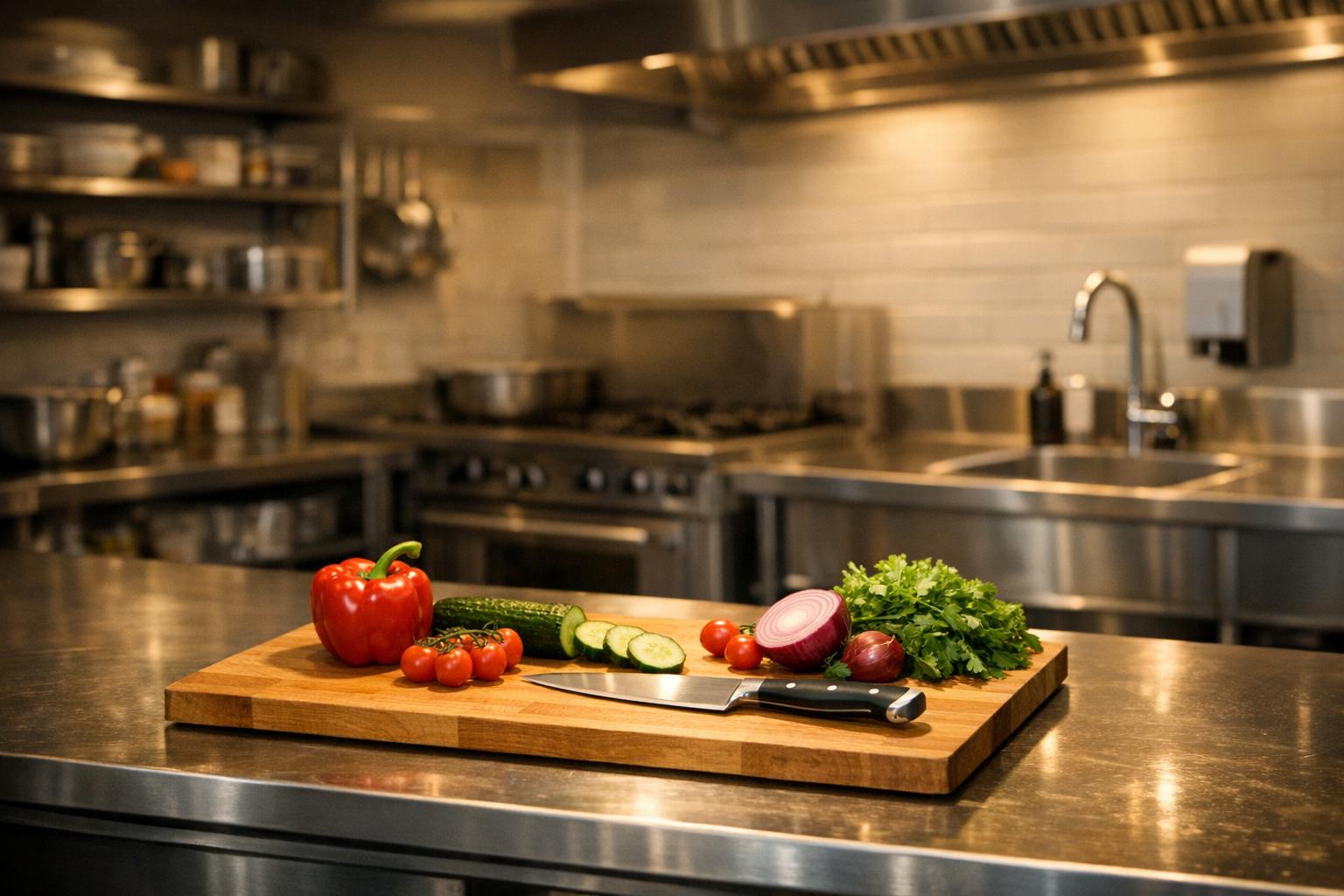
To maintain safety, cleanliness, and compliance in food prep areas, proper lighting is non-negotiable. Here's what you need to know:
Proper lighting isn't just about compliance - it ensures safety, reduces accidents, and improves visibility in food prep areas.
In Texas, food preparation areas must adhere to stringent lighting regulations designed to maintain food quality, ensure sanitation, and prioritize employee safety. These rules aim to prevent glass contamination, keep work surfaces clean, and reduce the risk of workplace injuries. Together, these regulations form the foundation of lighting standards for food prep facilities across the state.
The Texas Food Establishment Rules (TFER) lay out the essential lighting requirements for commercial food operations statewide. As stated in 26 Tex. Admin. Code § 554.320:
"Current recommendations of the Illumination Engineering Society of North America must be followed to achieve proper illumination characteristics and lighting levels throughout the facility."
TFER emphasizes the use of shatterproof or shielded fixtures that are light-colored, easy to clean, and strategically placed to minimize shadows on work surfaces. During permit reviews, inspectors assess both the brightness levels and the compliance of lighting fixtures to ensure they meet these standards.
Local health departments play a critical role in refining and enforcing state lighting standards. For example, some jurisdictions, like Celina, require specific measurements for lighting in walk-in refrigeration units, taken exactly 30 inches above the floor.
During initial permit applications and routine inspections, local inspectors use light meters to measure illumination intensity at designated heights. Facilities must also provide documentation proving compliance with these standards to secure a Health Permit.
The Illumination Engineering Society (IES) serves as the technical authority behind Texas's lighting requirements. As a trusted organization, IES develops consensus-based guidelines that help regulators and operators determine appropriate lighting levels for various tasks. For instance, tasks involving detailed knife work typically require 50 foot-candles of light, while storage areas may only need 10 foot-candles.
IES recommends measuring illumination directly on task surfaces - such as cutting boards, prep tables, and equipment - to ensure adequate lighting levels. For tasks requiring high precision in commercial kitchens, lighting intensities between 50 and 100 foot-candles are often advised to reduce eye strain and improve safety. Texas state code incorporates these recommendations, making compliance with IES standards mandatory for all food establishments.

Food Prep Area Lighting Requirements by Zone
The FDA Food Code outlines three main levels of light intensity, each tailored to specific tasks and zones within food service facilities. These guidelines help ensure safety, visibility, and compliance with regulations, including those in Texas.
High-risk prep zones - areas where employees handle food or work with potentially dangerous tools like knives, slicers, or grinders - must have a minimum of 50 foot-candles (540 lux) of light. This level helps workers perform tasks safely and detect any signs of spoilage.
Support and service areas - such as handwashing stations, warewashing areas, utensil storage, buffets, salad bars, and reach-in or under-counter refrigerators - require 20 foot-candles (215–220 lux). This brightness ensures that staff can check cleanliness and read labels without difficulty.
Storage and cleaning zones - like walk-in coolers, dry food storage areas, and spaces undergoing cleaning - need at least 10 foot-candles (108–110 lux). This level provides enough light for safe movement, reading labels, and general visibility.
To verify compliance, a calibrated foot-candle or lux meter should be used, as recommended by the Food Code. Measurements are typically taken at 30 inches (75 cm) above the floor, which aligns with the average working height for food preparation tasks.
For accuracy, place the meter where employees actually perform their work, as shadows or obstructions can affect light levels. Regular monitoring is crucial, as grease and dust buildup on fixtures can reduce brightness over time. Monthly checks can help maintain proper light intensity between health inspections.
| Area Type | Activity/Location | Code-Minimum (Foot-Candles) | Code-Minimum (Lux) |
|---|---|---|---|
| High-Risk Prep | Cutting stations, slicing, grinding, tool work | 50 fc | 540 lux |
| Support & Service | Handwashing, warewashing, utensil storage, buffets | 20 fc | 215–220 lux |
| Storage & Cleaning | Walk-in coolers, dry storage, cleaning areas | 10 fc | 108–110 lux |
When selecting lighting fixtures, opt for LEDs with a high Color Rendering Index (CRI). This helps staff identify food spoilage or contamination more easily. Additionally, modern LED vapor-tight fixtures are a great choice, offering a lifespan of 50,000 to 100,000 hours and maintaining consistent brightness far longer than traditional bulbs.
For facilities in Texas, Texas Lighting Consultants can provide expert advice on selecting and installing energy-efficient lighting solutions. Their tailored approach ensures compliance with regulatory standards while improving the overall visual environment in food preparation areas.
When it comes to lighting fixtures for food prep areas, it's not just about brightness - safety and hygiene take center stage. According to the FDA, lighting fixtures installed over exposed food must either be "safety type" or properly shielded to prevent contamination in case of bulb breakage. This means opting for fixtures with polycarbonate or acrylic lenses, ensuring they meet strict NSF and IP standards for safety and cleanliness.
Glass fixtures are a no-go in food prep areas. If a bulb breaks, it can scatter fragments that contaminate the workspace. Instead, choose fixtures made from shatterproof materials like polycarbonate or acrylic. These impact-resistant options meet NSF/ANSI 2 standards, which require non-toxic, corrosion-resistant materials with smooth, easy-to-clean surfaces.
"NSF-rated lighting is designed with smooth, easy-to-clean surfaces and shatterproof materials that prevent the accumulation of dust, grease, and other contaminants." – Access Fixtures
Beyond material safety, it's essential to ensure the fixtures comply with industry certifications to prevent microbial and physical hazards. Fixtures with NSF/ANSI 2 certification are built with smooth exteriors and no exposed screws, eliminating crevices where bacteria, moisture, or food debris could collect. Look for the NSF mark or labels like "ETL listed to NSF Standard 2" to confirm compliance.
IP ratings are another critical factor, as they measure a fixture's resistance to dust and moisture. For food prep areas, fixtures should have at least an IP65 rating, while spaces requiring high-pressure washdowns need IP69K-rated fixtures. The "6" in the rating ensures the fixture is dust-tight, while "9K" indicates it can withstand close-range sprays at pressures up to 1,450 psi and temperatures as high as 176°F.
"An LED fixture that is IP69K rated meets the highest degree of protection against objects/dust and liquid intruding into the enclosure of the fixture." – Litetronics
Proper placement of lighting fixtures is just as important as their materials and certifications. Poor positioning can create shadows or glare, obscuring contaminants or increasing risks when employees handle sharp tools. Fixtures should be mounted above primary work surfaces to provide at least 50 foot-candles (540 lux) of illumination. Avoid placements that cast shadows over cutting boards or prep tables.
"The fixture must have no gaps or openings that permit bacteria, dust, or other particles from the plenum to leak into the prep area." – Kurtzon
Choose mounting styles - whether recessed, surface, suspended, or corner-mounted - that suit your facility's layout while minimizing dust and moisture buildup. Fixtures with tight seals help keep vapors and particles out of food prep zones. For cold storage areas, LED fixtures with "instant-on" capability are a smart choice. They reach full brightness immediately in low temperatures and produce less heat, which helps reduce the load on refrigeration systems.
Texas Lighting Consultants specializes in working with food service facilities across Texas to select and install NSF-certified, IP-rated fixtures. Their expertise ensures your lighting solutions not only improve safety but also meet FDA Food Code requirements and local health standards, keeping your facility compliant for the long haul.
Before upgrading your lighting, grab a light meter and measure the current lighting levels. Focus on key areas like general spaces, storage zones, handwashing stations, and food prep surfaces. For accuracy, measure at 30 inches above the floor in general areas and directly at work surfaces. Keep in mind the minimum standards: 10 foot-candles (fc) for storage areas, 20 fc for handwashing and warewashing zones, and 50 fc for food prep surfaces. Record these readings to establish a baseline and identify areas needing improvement.
While you're at it, inspect your existing fixtures for any damage or corrosion that could pose safety risks. Take a close look at the layout, too. Electrical conduits should maintain a clearance of at least ½ inch from walls and 6 inches above the floor, making cleaning easier. Pay attention to spots with shadows, glare, or inadequate lighting, as these could compromise safety. Detailed documentation at this stage helps ensure you're ready to meet local health requirements.
After gathering your data, prepare and submit detailed lighting plans to your local Environmental Health Plan Check. These plans should be drawn to scale (¼ inch = 1 foot) and include specifics like fixture types, mounting heights, and certifications. In some cases - such as ownership changes or structural modifications - a field inspection might be required. Reaching out to your local health department early can help you navigate these requirements smoothly.
Working with local authorities ensures your plans comply with health codes while addressing critical factors like employee movement, shadow reduction, and proper fixture placement. This is especially important in areas like washdown zones, where fixtures need the right IP ratings to withstand cleaning processes. Once your plans are approved, you're ready to move forward with installation.
After installation, use the light meter again to confirm the required foot-candle levels at all designated points. Then, schedule a formal inspection with your local health department to verify that the completed work aligns with your approved plans. Double-check that all fixtures are sealed, shatterproof or shielded, and free of gaps where bacteria could hide.
Document your post-installation light readings, along with fixture certifications and cleaning schedules. Keeping these records not only proves compliance during health inspections but also helps you monitor lighting performance over time. If you spot any lingering shadows or glare during daily operations, adjust the fixtures or add supplemental lighting to eliminate problem areas. This final step ensures your facility is safe, well-lit, and fully compliant.
Ensuring optimal lighting performance goes beyond proper installation - it requires consistent maintenance to keep everything running smoothly.
Regular inspections are key to keeping your lighting system up to code and ensuring food preparation areas remain safe. Use a light meter to check illumination levels at critical points: 10 foot-candles in storage areas, 20 foot-candles at handwashing stations, and 50 foot-candles at food prep surfaces where knives or slicers are used. Be sure to measure light levels at the actual working height to detect any drops in brightness.
Inspect fixtures for burned-out bulbs, cracked lenses, or damaged shatterproof covers - glass breakage protection is one of the most frequently cited issues during inspections. Also, look for grease, dust, or food debris buildup, which can reduce light output and create a breeding ground for bacteria. For NSF-certified and IP-rated fixtures, check seals and gaskets for wear or gaps that could let in moisture or pests. In cold storage areas, confirm that lights reach full brightness immediately - LEDs typically outperform traditional bulbs in cold environments.
These inspections lay the groundwork for safe cleaning practices.
Keep fixture exteriors clean using approved cleaning agents to prevent grease buildup that can dull the light output. Before using high-pressure hoses, confirm that your fixtures are rated IP69K - using high-pressure water on fixtures rated IP65 or lower can compromise their seals. The "6" in IP69K signifies complete protection against dust, while the "9K" ensures resistance to high-pressure, high-temperature water sprays.
Maintain 110 lux (10 foot-candles) of light during cleaning to ensure all surfaces are properly sanitized. Documenting these cleaning efforts is essential for compliance.
Maintain detailed records of light-level measurements, bulb replacements, and cleaning dates. These logs demonstrate due diligence during health inspections and help ensure ongoing compliance with Food Code regulations. Track lamp replacements to verify instant-on performance, especially in cold storage areas where traditional bulbs may lag in brightness. Keeping accurate records not only supports compliance but also helps reduce risks and workplace injuries.
Proper lighting in food prep areas is essential for maintaining safety, efficiency, and compliance with regulations. By ensuring the required brightness levels - 50 foot-candles at prep surfaces, 20 foot-candles at handwashing stations, and 10 foot-candles in storage areas - facilities not only meet FDA Food Code and Texas Food Establishment Rules but also reduce workplace accidents and improve quality control.
Selecting the right fixtures is equally important. Opt for NSF-certified, shatterproof lighting with appropriate IP ratings to prevent contamination and endure rigorous cleaning routines. High CRI LED lights are particularly effective, offering excellent performance in cold storage, instant-on functionality, and lower energy costs by reducing HVAC demands.
For a smooth transition to compliant lighting, expert help makes all the difference. Texas Lighting Consultants, a HUB-certified, woman-owned business, specializes in tailored lighting solutions for commercial food facilities across Texas. From comprehensive assessments and photometric analysis to fixture selection and post-installation testing, we ensure your system aligns with FDA Food Code standards and local health regulations. We handle every step - design, installation, and beyond - making the process simple and stress-free.
Ongoing maintenance, which includes regular inspections, thorough cleaning, and detailed record-keeping, is key to maintaining safety, efficiency, and compliance. When designed, installed, and maintained correctly, lighting becomes a powerful tool to safeguard food safety and support your team’s success.
Proper lighting plays a key role in ensuring safety and efficiency in food preparation areas. Different areas have specific minimum lighting standards to maintain visibility and comply with health regulations:
These guidelines help create a safe environment for food handling. If you’re looking for reliable lighting solutions that meet these standards, it’s worth reaching out to experts like Texas Lighting Consultants.
To ensure food preparation areas meet safety and hygiene standards, start by selecting NSF-certified or food-safe lighting fixtures. Look for sealed, shatterproof luminaires that are rated for wet locations or wash-down environments - this ensures they can handle cleaning with water, steam, or chemicals. LED fixtures are a smart option because they’re durable, energy-efficient, and perform well in cooler spaces like walk-in refrigerators or meat-processing areas.
Proper brightness levels are essential for compliance. Regulations typically require 20 foot-candles of light on general food prep surfaces, 10 foot-candles in storage or refrigeration areas, and 50 foot-candles in precision work zones, such as cutting stations. To check compliance, measure light levels at approximately 30 inches above the floor.
Regular upkeep is just as important. Replace damaged fixtures promptly, clean lenses to maintain brightness, and keep a record of inspections. For expert advice, Texas Lighting Consultants can assist with designing and installing systems that meet all safety and energy compliance standards, keeping your space efficient and regulation-ready.
Proper lighting in food preparation areas plays a crucial role in ensuring safety, cleanliness, and adherence to food safety regulations. Well-maintained lighting provides the necessary brightness for workers to see clearly, making it easier to clean surfaces effectively and handle food with care.
Regular inspections are also vital to avoid problems like broken bulbs or potential glass contamination, which could jeopardize food safety. Keeping lighting systems in top shape not only helps meet health regulations but also promotes a safer and more efficient workspace.
We’re a HUB-certified Texas lighting company specializing in surveys, calculations, and installations for government and contractor projects.
© 2025-26 | Texas Lighting Consultants | All Right Reserved.