January 5, 2026
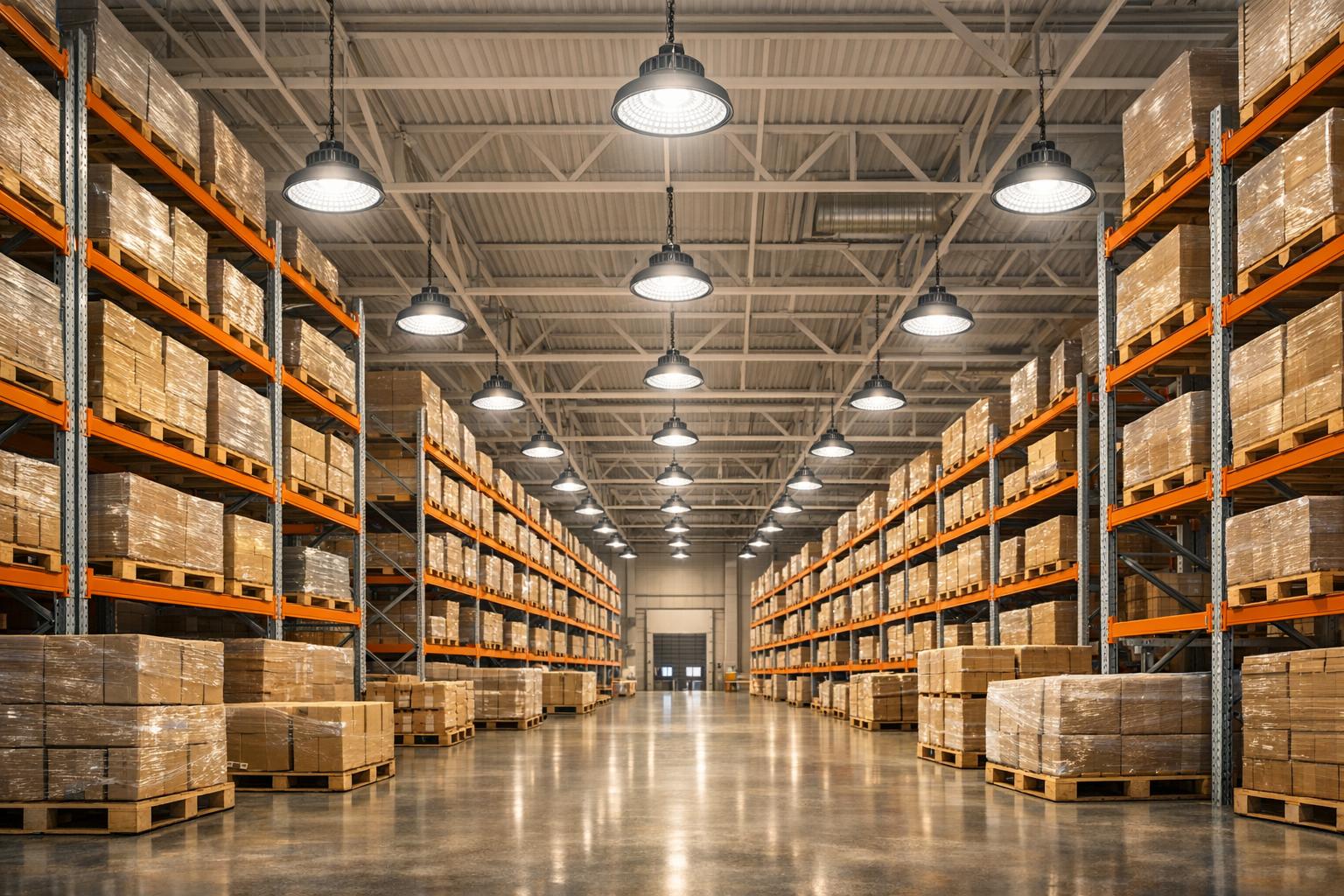
Lighting plays a key role in warehouse operations, impacting energy costs, safety, and productivity. Poor lighting can lead to accidents, inefficiencies, and higher expenses. Here’s what you need to know:
Upgrading to LED systems with smart controls like motion sensors can significantly cut costs while improving safety and efficiency.

Warehouse Lighting Requirements by Zone: OSHA vs IES Standards
Getting lighting right in a warehouse isn’t just about making the space bright - it’s about meeting legal standards that ensure worker safety and compliance. In the U.S., warehouse lighting must meet OSHA’s minimum safety requirements and align with IES guidelines for optimal working conditions. Falling short of these standards can lead to fines ranging from $5,000 to over $50,000 per violation. Here’s a closer look at the lighting requirements for different warehouse zones.
Different areas in a warehouse demand specific lighting levels based on the tasks performed there. For example, OSHA Standard 1926.56 requires at least 5 foot-candles (fc) for general warehouse areas. However, tasks like reading small labels or working with tiny parts may need 30 to 50 fc, while bulk storage areas often function well with 10 to 20 fc.
| Warehouse Zone | OSHA Minimum (fc) | IES Recommended (fc) |
|---|---|---|
| Inactive Storage | 5 | 5–10 |
| Active Storage (Large Items) | 5 | 10–20 |
| Active Storage (Small Items/Labels) | 5 | 30–50 |
| Loading Docks | 5 | 30–50 |
| Aisles & Corridors | 5 | 10–20 |
| Quality Control / Fine Detail Work | 5 | 50–100 |
| Offices / First Aid Stations | 30 | 30–50 |
In warehouses with high racks, vertical lighting is especially important. Workers need clear visibility at both floor and eye levels to read labels on elevated shelves. The IES recommends maintaining a horizontal average-to-minimum ratio of 3:1 and a vertical ratio of 10:1 to prevent dark spots and ensure consistent visibility.
Additionally, OSHA Standard 1910.178 specifies that if general lighting falls below 2 lumens per square foot (2 fc), forklifts must be equipped with auxiliary lights. Emergency exit routes are another critical area - OSHA Standard 1910.37 mandates proper lighting to ensure employees can navigate exit paths safely, even during power outages.
Good lighting doesn’t just boost productivity - it’s a key factor in preventing workplace accidents. Poor lighting can make obstacles harder to see and increase the risk of equipment-related incidents. Beyond meeting minimum light levels, fixtures should be installed at least 7 feet above work surfaces or include OSHA-compliant shatterproof shields and protective guards to prevent contact with live parts.
Keeping lighting effective also requires regular maintenance. Dust and grime on fixtures can dramatically reduce light output, so routine cleaning is essential. Even the color of walls and ceilings plays a role - white surfaces reflect about 80% of light, compared to just 20–40% for bare concrete. States like California have stricter rules under Title 8, Section 3317, so it’s important to check local regulations when designing your lighting system.
Creating an effective lighting system for a warehouse involves more than just installing bright lights. It’s about finding the right balance between proper light distribution, worker comfort, and operational efficiency while accounting for the unique layout and characteristics of your facility.
The height of your warehouse ceiling plays a major role in determining the type of fixtures and how light is distributed. For ceilings between 20 and 45 feet, high bay fixtures with narrower beam angles (60°–90°) are ideal for directing light downward. On the other hand, lower ceilings (12 to 20 feet) benefit from low bay fixtures with wider beam angles (90°–120°) to provide even coverage and avoid hot spots.
To ensure consistent illumination, position fixtures centrally along aisles rather than directly above shelving. This helps reduce shadows and ensures both the floor and racks are well-lit. In warehouses with tall storage systems, vertical lighting is just as important as horizontal lighting. Workers need clear visibility to read labels on pallets stored at height.
The color of walls and ceilings also affects lighting design. Facilities with darker surfaces may need up to 33% more fixtures to achieve the same brightness as those with lighter interiors. For complex layouts, a photometric study can help determine the best fixture types and placement for uniform lighting.
Glare isn’t just an annoyance - it can pose safety risks. "Disability glare" makes it harder to judge the position or speed of moving objects, such as forklifts or pedestrians, increasing the likelihood of accidents. Excessive glare can also lead to eye strain, headaches, and reduced focus, which impacts productivity.
To combat glare, consider fixtures with frosted lenses, diffusers, or reflectors to block the direct view of the light source. Proper placement of luminaires also helps minimize glare. Additionally, energy-efficient solutions like occupancy sensors and daylight harvesting systems can significantly reduce energy use. Occupancy sensors turn lights on only when needed, cutting energy usage by 10% to 90%. Daylight harvesting systems use photosensors to dim artificial lights when there’s enough natural light, further reducing energy consumption . Switching to LED fixtures can lower energy use by up to 75% compared to traditional metal halide systems while offering better control over brightness.
Your warehouse’s ceiling height and layout directly influence the choice of lighting fixtures. The table below provides recommendations based on ceiling height, wattage, spacing, and beam angles:
| Ceiling Height | Recommended Wattage | Typical Spacing | Beam Angle |
|---|---|---|---|
| Under 15 feet | 80W | 10 feet | 90°–120° (wide) |
| 15–25 feet | 100W–150W | 14–20 feet | 90° (medium) |
| 35–45 feet | 240W–300W | 25 feet | 60°–90° (narrow) |
| 50 feet | 320W | 30+ feet | 60° (very narrow) |
For narrow aisles, asymmetrical fixtures are ideal for focusing light on vertical shelf faces. Open storage areas, however, benefit from a symmetrical grid layout. If skylights are part of the design, space them no more than 1.5 times the ceiling height apart to maintain consistent lighting levels. High-bay installations can also benefit from fixtures that offer 15% to 20% uplight, reducing the "cave effect" and improving overall light quality in spaces with reflective ceilings.
"In warehouses where the ceiling height is 20 - 25 ft we typically suggest 22,500 lumens 150 watt LED UFO high bay lights. For ceiling heights over 35 ft, we've found 45,000 lumens 300 watt LED UFO high bay lights are a great fit." – Tyler, Lighting Specialist at LED Lighting Supply
When choosing LED high bay fixtures, it's crucial to align them with your warehouse layout and lighting requirements. The right fixture type can make all the difference in avoiding shadows, reducing energy waste, and ensuring clear visibility. The two primary options - UFO (round) high bays and linear high bays - are designed for specific applications, so selecting the wrong one could lead to inefficiencies and poor lighting performance.
UFO high bays are compact and highly durable, making them ideal for rugged environments. They come with IP65 ratings for moisture and dust protection and IK08 impact resistance, which is especially useful in areas with heavy forklift traffic. These fixtures excel in open spaces like staging zones and receiving docks, particularly in facilities with ceilings over 20 feet. Installation is straightforward with their single-point hook or pendant mount, and they deliver impressive efficiency - up to 180 lumens per watt.
Linear high bays, on the other hand, are rectangular and designed to distribute light evenly down narrow aisles. This makes them perfect for warehouses with tall shelving systems, as they minimize shadows between racks and ensure labels are easy to read at all heights. These fixtures are often used to replace older T5/T8 systems and are well-suited for retail-warehouse hybrids that demand consistent, stripe-free lighting. For example, a facility in Williston, ND, replaced 72 T5 fixtures with LED UFO high bays, resulting in 60.33 foot-candles, a 46% reduction in energy use, and annual savings of $5,369, with an ROI achieved in under 19 months.
Some LED fixtures offer adjustable wattage (80W–150W) and color temperatures (4,000K–5,000K), allowing for on-site customization without the need to swap out fixtures. Most warehouses prefer a 5,000K color temperature for its crisp, bright white light, which enhances visibility for tasks like reading labels and performing detailed work.
To help you choose the best fixture for your application, here's a comparison of LED high bay options based on wattage, lumen output, efficiency, and durability:
| Fixture Type | Typical Wattage | Lumen Output | Efficacy (lm/W) | Best Application | Durability Rating |
|---|---|---|---|---|---|
| UFO High Bay | 100W–600W | 13,000–96,000 | Up to 180 | Open areas, high ceilings, gyms | IP65, IK08 |
| Linear High Bay | 80W–500W | 11,000–42,000 | 135–140 | Aisles, racking, retail rows | Usually Dry/Damp |
| Vapor Tight | 100W–240W | 15,000–35,000 | 130–150 | Wet/dusty areas, washdown bays | IP67/IP69K |
For ceiling height, follow these general guidelines: use 80W fixtures for ceilings under 15 feet, 100W–150W for 15–25 feet, 200W–240W for 25–35 feet, and 300W or more for ceilings over 40 feet. For tasks requiring detailed focus, aim for 50–100 foot-candles, while general warehouse lighting typically needs 30–50 foot-candles.
In Charlotte, NC, Stone Basyx installed 150W high-output UFO high bays at a mounting height of 23 feet. This setup achieved an average of 65.36 foot-candles with a uniformity ratio of 2.21, significantly improving visibility for their combined warehouse and retail operations.
"Warehouses can slash overhead costs by transitioning from traditional lighting solutions to energy-efficient high bay LED systems." – Dwayne Kula, President/Founder, LED Lighting Supply
Start by conducting a photometric study to digitally model your facility. This process helps determine the best fixture placement and lumen requirements for your warehouse.
"A professionally designed warehouse lighting plan serves as the foundation for all subsequent decisions, ensuring optimal fixture selection without unnecessary purchases".
When planning fixture placement, avoid obstructions like sprinklers, HVAC ducts, or large machinery. Additionally, match the lumens to the mounting height for optimal lighting:
Maintaining uniform light distribution throughout the space is key to creating a safe and efficient working environment.
Keeping your lighting system in top shape requires regular maintenance. Clean fixtures, lenses, and diffusers routinely to prevent light output from diminishing due to dust or debris. Use a light meter to measure footcandles at the task plane, ensuring light levels meet safety standards. Regular inspections can also catch loose connections or wiring issues before they escalate into major problems.
While LED systems require less upkeep compared to traditional HID or fluorescent lighting, proper maintenance still makes a difference. Regular care extends the lifespan of fixtures and ensures they perform within design specifications. If your warehouse layout changes - whether it’s new racking or a different floor plan - reassess the lighting design to avoid creating shadows or dark spots.

For a hassle-free experience, Texas Lighting Consultants offers turnkey solutions tailored to Texas warehouses. From photometric studies and fixture selection to energy-efficient LED retrofits, their team manages every aspect of the project. They even handle rebate assistance, ensuring you maximize savings.
As a HUB-certified, woman-owned business, Texas Lighting Consultants ensures compliance with OSHA and NEC standards while helping clients achieve energy cost reductions of 50–90%. With their turnkey approach, you’ll have a single point of contact for design, installation, and ongoing support - eliminating the stress of juggling multiple vendors.
Effective warehouse lighting hinges on meeting safety regulations, choosing the right fixtures, and keeping the system in good working order. With proper lighting, you can enhance visibility, improve worker safety, increase productivity, and manage energy costs more effectively.
LED high bay lights have become a popular choice, offering 50–90% better energy efficiency compared to older systems, while also cutting down on maintenance. Whether your space calls for UFO fixtures in high-ceiling areas or linear fixtures for aisles with racks, the right choice depends on factors like ceiling height, specific zone needs, and overall operational requirements.
Even the best LED systems require occasional cleaning and inspections to maintain peak performance. Adding smart controls, like motion sensors, can further reduce energy usage by up to 30%. A professional photometric study is also a wise step to ensure consistent lighting without hazardous dark spots.
For a complete solution, Texas Lighting Consultants handles everything from design and installation to securing rebates. They ensure your system complies with OSHA and NEC standards while helping facilities across Texas achieve noticeable energy savings. As a HUB-certified, woman-owned business, they provide a seamless, one-stop service for all your warehouse lighting needs.
Ready to upgrade your warehouse lighting? Visit texaslightingconsultants.com to explore custom, energy-efficient solutions tailored to your facility.
LED lighting brings a range of advantages to warehouses. For starters, it can cut energy use by more than 50%, which translates to noticeably lower operating expenses. Plus, with a lifespan often surpassing 10 years, LEDs require less maintenance and fewer replacements, saving both time and money.
On top of that, LED lights deliver bright and steady illumination, which boosts visibility and helps create a safer, more efficient workplace. Their combination of energy efficiency and durability makes them a smart option for warehouses aiming to balance performance with cost-effectiveness.
To figure out the right lighting levels for your warehouse, start by defining the purpose of each area. Common zones include aisles, rack faces, workspaces, loading docks, and specialized areas like inspection stations. For basic tasks on the warehouse floor, 5 foot-candles (about 54 lux) usually does the job. Aisles and passageways should have 10 foot-candles (around 108 lux) to ensure safety. For vertical surfaces like rack faces, aim for 5–15 foot-candles, while general work areas benefit from 10–30 foot-candles for better visibility.
You’ll also need to factor in things like ceiling height, room dimensions, and surface reflectivity - typically, ceilings reflect about 80% and walls around 30%. These details help you calculate the light output needed for even coverage. In open areas without racking, 9 foot-candles (roughly 100 lux) is a solid baseline, but for spaces with constant activity, bump it up to 19 foot-candles (200 lux).
Once your lighting is set up, use a lux or foot-candle meter to check that illumination levels are consistent across both horizontal and vertical surfaces. For professional help, Texas Lighting Consultants can design and install energy-efficient LED lighting tailored to your warehouse, ensuring compliance, energy savings, and a more comfortable work environment.
Proper upkeep of warehouse lighting systems is essential for safety, efficiency, and extending their lifespan. Start with routine inspections to evaluate the condition of fixtures, check lamp output, and ensure controls are functioning properly. Regularly cleaning dust and debris from high-bay and low-bay lights not only maintains optimal light levels but also helps prevent overheating. It's equally important to measure illumination levels - typically around 200–300 fc for aisles and up to 500 fc for tasks requiring precision - to ensure all work areas meet necessary standards.
Common problems like dim lighting, glare, or flickering should be addressed immediately, as they can compromise both worker safety and productivity. Regularly test motion sensors, daylight-harvesting controls, and emergency lighting circuits to confirm they’re operating as intended. Don’t forget to inspect wiring, ballasts, and LED drivers for wear or damage. If you notice a significant drop in light output, it may be time to replace aging LEDs or upgrade to more energy-efficient fixtures.
For warehouses dealing with challenging environments - think dust, moisture, or heavy vibrations - using sealed, impact-resistant fixtures is key to ensuring durability. Maintaining a detailed maintenance plan that tracks service dates, component lifespans, and energy consumption can help you avoid unexpected breakdowns. Companies like Texas Lighting Consultants provide services such as regular cleaning, performance testing, and quick replacements to keep your systems running smoothly, safely, and in line with industry requirements.
We’re a HUB-certified Texas lighting company specializing in surveys, calculations, and installations for government and contractor projects.
© 2025-26 | Texas Lighting Consultants | All Right Reserved.