December 18, 2025
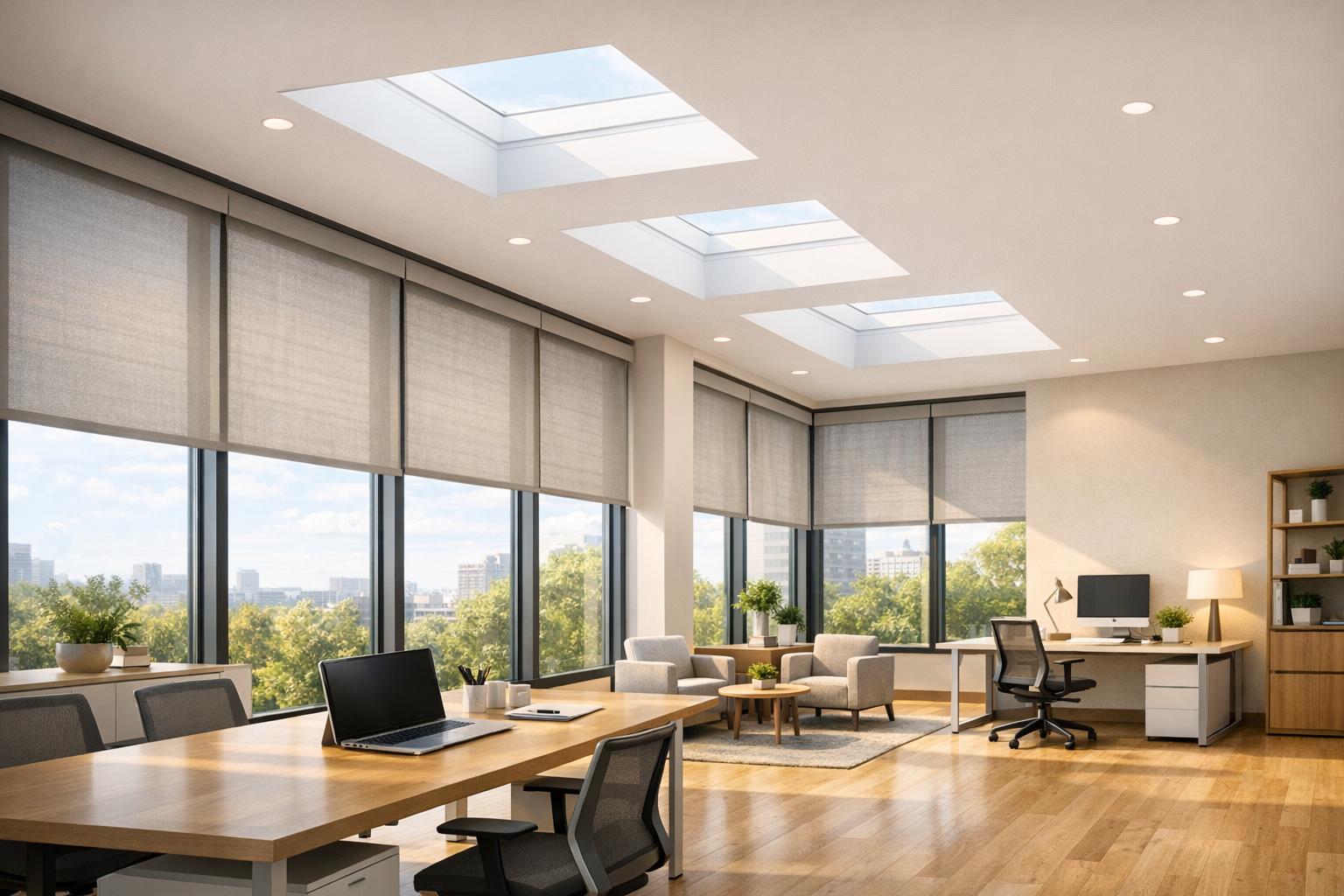
Want to save up to 33% on energy costs? Daylight integration might be the answer. By using natural light through windows, skylights, and advanced controls, buildings can cut lighting energy use by as much as 75% and cooling demands by 10%-20%. This approach not only reduces electricity bills but also improves indoor comfort and productivity.
Facilities in sunny states like Texas can see faster returns on investment, especially with incentives like tax deductions and rebates. Upfront costs for daylighting systems range from $0.50 to $0.75 per square foot, with annual savings of $0.05 to $0.20 per square foot, often achieving payback in 2-4 years.
Bottom Line: Daylight integration, when paired with smart controls and shading systems, is a practical way to cut energy costs while creating brighter, more comfortable spaces.

Daylight Integration Energy Savings and ROI Statistics
Daylight integration can significantly cut energy costs, but it comes with its own set of challenges, such as glare, heat gain, and outdated controls. These issues are particularly noticeable in sun-drenched areas like Texas.
One of the biggest hurdles in daylight integration is ensuring that natural light spreads evenly throughout a space. When direct sunlight streams through windows, it can cause discomfort glare - either by shining directly into people’s eyes or reflecting off surfaces like computer screens and glossy desks. This glare reduces contrast, making it harder to read documents or see details on monitors. The problem is especially acute near windows, where light levels are intense but drop off rapidly, leaving darker areas deeper inside the building.
A brightness ratio exceeding 10:1 can lead to eye strain and fatigue. Alexander Sassoon, an Electrical Design Engineer at P2S Engineering Inc., explains:
"At no point should the brightest spot be more than 10 times brighter than the darkest spot, or it will become a source of indirect glare".
Low-angle sunlight during sunrise and sunset also poses a challenge, as it penetrates spaces at angles that standard overhead shading systems can’t block.
When glare isn’t managed effectively - often due to a lack of automated systems - occupants tend to close blinds and leave them shut all day, negating the energy savings that daylighting could provide. Even north-facing windows aren’t immune; reflective glass from nearby buildings can bounce sunlight into areas designed to receive only indirect light, causing unexpected glare.
Excessive daylight doesn’t just affect comfort - it also raises cooling demands. Windows contribute as much as 34% of the energy used for heating and cooling in commercial buildings. In Texas, the problem becomes even more pronounced during the summer. East- and west-facing walls, when unshaded, receive nearly twice the solar heat per square foot compared to north- and south-facing walls. Roofs, meanwhile, can absorb three to four times more solar radiation than vertical walls on a midsummer day.
This added heat forces air conditioning systems to work overtime, often canceling out the energy savings from reduced lighting. Dark-colored roofs exacerbate the issue by absorbing more heat, leading to higher attic temperatures and increased cooling loads. The U.S. Department of Energy emphasizes:
"It is generally easier to block heat from entering a house than to remove it once it is there".
These thermal challenges highlight the need for integrated systems to manage both light and heat effectively.
Another common issue is the lack of automated controls in daylighting systems. According to the Whole Building Design Guide:
"If daylighting features such as windows and skylights are not paired with daylighting functionality such as daylight-responsive dimming controls, then the daylighting-enhanced building will more than likely use more energy, not less".
Research shows that manually operated shades are adjusted infrequently - about 50% of the time during extended observation periods. Occupants also tend to leave lights and blinds in suboptimal positions, further reducing energy efficiency.
Without daylight-responsive dimming systems, especially in areas within 10 to 15 feet of windows, buildings miss out on significant energy-saving opportunities. Even when such systems are installed, poor commissioning can render them ineffective. Misconfigured settings may cause lights to stay at full brightness or dim at inappropriate times, undermining the potential energy cost reductions daylight integration can deliver.
Tackling the challenges of daylight integration involves using automated controls, thoughtful design, and responsive systems. These approaches address common issues like glare, uneven lighting, and unwanted heat gain, while significantly reducing reliance on artificial lighting - potentially cutting energy use by up to 80%.
Daylight harvesting relies on photo sensors to monitor light levels and automatically adjust artificial lighting when natural light is sufficient. This method can reduce daytime electricity used for lighting by 50% and lower total building energy consumption by up to 13%.
Photo sensors come in three main types, each serving specific needs:
Integrating networked controls with daylight harvesting can amplify energy savings - up to 73% more than LED retrofits alone. Alexander Sassoon, an Electrical Design Engineer at P2S Engineering Inc., highlights the importance of proper integration:
"Without [integrating the lighting control system], there will be very little energy savings and general occupant confusion".
Strategically grouping lights into control zones based on "lease depth" - the distance from windows - ensures areas farther from daylight sources remain adequately lit, while those near windows adjust accordingly. Beyond sensors, architectural solutions help diffuse and distribute natural light evenly.
Skylights introduce "toplighting", bringing daylight to interior spaces that windows can't reach. By incorporating translucent glazing or diffusing materials, skylights scatter sunlight, preventing harsh glare and "hot spots." Ceiling diffusers beneath skylights further distribute light evenly across spaces.
Tubular Daylighting Devices (TDDs), often known as Solatubes, are another effective option. These systems use a rooftop dome to capture sunlight, channel it through a reflective tube, and diffuse it via a ceiling lens. They're especially useful for retrofits or deep interior areas where traditional skylights aren't practical. Daylighting and harvesting systems can achieve lighting energy savings ranging from 24% to 80%.
Ricardo Álvarez-Díaz, FAIA, Founder and Principal at Álvarez-Díaz & Villalón, explains the broader benefits:
"Increased natural light can save energy, increase the quality of the visual environment, improve user satisfaction and reduce operating expenses - all crucial to a successful affordable housing project".
Modern skylights often feature double-layered materials or insulating infills. These additions help balance daylight access while minimizing heat gain in summer and heat loss in winter, contributing to lower energy costs overall.
Automated shading systems complement daylighting strategies by managing glare and heat gain. Motorized blinds and shades dynamically adjust to control sunlight, while motorized louvers tilt to balance light and comfort. In warmer climates like Texas, exterior shading devices are particularly effective at diffusing sunlight and blocking heat before it enters a building.
For maximum efficiency, shading systems must work in sync with daylight-responsive electric lighting controls. The Whole Building Design Guide underscores this integration:
"The aim of an efficient daylighting design is not only to provide illuminance levels that are sufficient for good performance, but also to maintain a comfortable and pleasing atmosphere".
Different facades call for tailored shading approaches. Horizontal shades are ideal for south-facing facades but may not perform as well on east or west-facing elevations, where the sun's angle is lower.
Reducing reliance on electric lighting through shading and daylighting can also cut a building's cooling energy use by 10% to 20%. When motorized shades are programmed to work with photo sensors and dimming systems, they ensure lights dim as shades open, maximizing energy savings and occupant comfort.
Integrating daylight into building designs can slash energy costs by up to one-third, primarily by reducing lighting and cooling demands. With well-planned daylighting strategies, lighting energy use can drop by as much as 75%, while daytime artificial lighting costs can fall by an additional 28%.
Cutting back on electric lighting also means less heat is generated, which reduces the strain on cooling systems. This, in turn, lowers cooling energy use by another 10% to 20%. In places like Texas, where air conditioning is a major expense, these dual savings can significantly speed up the return on investment.
Take Kohler Co.'s distribution center in Brownwood, Texas, for example. By replacing outdated high-intensity discharge (HID) lights with a system that includes Apollo solar light pipes, fluorescent fixtures, and motion sensors, the facility has saved $262,547 annually on electricity since October 2012. Similarly, the Coca-Cola Bottling Distribution Center in Brown Deer, Wisconsin, operates an average of eight hours daily without using any electricity for lighting, thanks to its combination of daylighting and supplemental artificial lighting systems.
Research backs these savings up. For instance, a simulated study at the Maulana Azad National Institute of Technology (MANIT) in Bhopal found daylighting reduced energy use by 56.3% annually, while maintaining a comfortable 500 lux lighting level. Another study in Hong Kong showed an air-conditioned office building saved an average of 15.7 kWh per square meter annually by using daylighting controls.
These measurable savings not only justify the upfront costs but also create opportunities for long-term financial benefits, especially in regions like Texas.
With over 320 sunny days a year, Texas facilities are perfectly positioned to maximize the benefits of daylight integration. In a state where cooling demands are high and budgets are tight, these savings can make a noticeable difference. For instance, lighting alone accounts for more than 30% of operating costs in typical warehouses and up to 44% of electricity use in office buildings, making lighting-related energy reductions an immediate financial win.
Pete Shannin, Vice President of Daylighting Product Solutions at Acuity Brands Lighting, highlights the potential:
"The payback value of daylight harvesting, leveraging skylights in conjunction with LED luminaires and lighting controls... can typically reduce electric lighting costs by a staggering 80% in retail, workplace and educational facilities".
The initial cost of integrated daylighting systems ranges from $0.50 to $0.75 per square foot. Annual savings typically fall between $0.05 and $0.20 per square foot, which often results in payback periods of just two to four years, depending on the facility's size and usage.
Texas facilities can also take advantage of financial incentives to boost ROI. The EPAct 179D tax deduction allows up to $5.00 per square foot for retrofits that achieve significant energy savings. For a 20,000-square-foot building, this could mean a potential $100,000 tax credit. When combined with local utility rebates and Renewable Energy Credits (RECs) available across Texas, these programs can significantly reduce upfront costs and improve the overall economics of daylighting projects.
Texas Lighting Consultants takes energy efficiency to the next level with tailored daylight solutions designed specifically for facilities in Texas. By combining advanced technology and a strategic approach, they help businesses maximize energy savings while improving lighting performance.
Using cutting-edge modeling tools like Radiance, TracePro, and EnergyPlus, Texas Lighting Consultants creates detailed 3-D models that factor in local weather, building orientation, and glazing properties. These assessments evaluate current energy use and lighting layouts, considering elements like window placement, ceiling reflectance, and floor depth. The goal? To determine the most effective spots for photosensors, automated shading, and LED fixtures. This data-driven process ensures that every control is positioned for maximum efficiency and impact.
To deliver the energy savings discussed earlier, Texas Lighting Consultants provides turnkey LED retrofits paired with intelligent control systems. These systems combine photosensors, occupancy sensors, and automated shading to create a balance between natural and artificial light.
A standout example is the Texas A&M University Evans Library project, completed in April 2024. EJS Associates and IoDistribution installed Autani intelligent lighting controls alongside LED fixtures, incorporating occupancy and daylight sensors. After a year, the project achieved an 83% reduction in annual energy costs, a verified success.
The system's precise digital zoning allows each fixture to respond independently to the daylight levels in its specific area. For instance, lighting in areas near windows dims or shuts off when natural light is sufficient, while interior zones maintain proper illumination. Additionally, integration with Building Automation Systems (BAS) connects lighting controls with HVAC systems, adjusting VAV dampers based on occupancy data for even greater energy savings. This seamless coordination enhances both efficiency and comfort.
Navigating rebates and tax incentives can be complex, but Texas Lighting Consultants simplifies the process. They identify utility rebates for LED installations and daylight-responsive controls and offer support for the Statute 179D tax deduction, which provides federal tax benefits for energy-efficient upgrades to commercial buildings. These incentives significantly boost the return on investment.
The team also prepares ASHRAE 90.1 compliance reports and guides projects toward certifications like LEED, ENERGY STAR, and EarthCraft. They ensure that photocontrol sensors meet code requirements for multilevel switching and implement open protocols like BACnet, LonWorks, and Modbus to support future system expansions. By managing the technical documentation and compliance requirements, Texas Lighting Consultants makes the entire process smoother, helping clients achieve their energy goals while maximizing savings.
Using natural light in buildings not only lowers energy expenses but also boosts the comfort and productivity of occupants. On average, buildings with daylight harvesting systems experience a 27% drop in annual energy costs. Plus, by reducing reliance on electric lighting, you can save an additional 10% to 20% on cooling costs since less heat is generated.
The advantages go beyond financial savings. Workers in environments with ample natural light report 51% less eye strain and 63% fewer headaches, leading to better productivity and fewer sick days. For commercial properties, advanced daylighting systems can increase rental appeal, with buildings seeing up to 23% higher occupancy rates compared to traditional spaces. However, achieving these results requires careful planning and well-integrated controls.
"Daylighting helps create a visually stimulating and productive environment for building occupants, while reducing as much as one-third of total building energy costs." - WBDG
To fully realize these benefits, proper sensor placement and automated dimming controls are essential. Without these, energy savings can be offset by increased cooling demands.
Texas Lighting Consultants specializes in comprehensive daylighting solutions, offering everything from expert assessments to full system installations. Their services include rebate assistance and ensuring compliance with regulations. Visit Texas Lighting Consultants to discover how they can help optimize daylight integration for your facility in Texas.
Incorporating natural daylight into your lighting design can help cut cooling costs by reducing the heat produced by electric lights. With less heat to manage, your building's cooling systems won’t need to work as hard, potentially saving you 10% to 20% on cooling expenses.
Making the most of natural light not only lowers electricity bills but also creates a more pleasant and energy-efficient space for everyone inside.
Integrating daylight into lighting systems isn't without its hurdles. One of the biggest challenges is striking the right balance between saving energy and ensuring occupants feel comfortable - especially in spaces where lighting needs can vary throughout the day. Getting the integration of blinds, sensors, and lighting controls just right is essential for smooth operation and optimal efficiency.
Another tricky aspect is the placement and calibration of daylight sensors. If they're not set up correctly, you could end up with spaces that are either too dim or too bright. There's also the matter of upfront installation costs, which can be steep. And in areas with frequent cloudy weather or limited natural light, the benefits of daylight integration might not be as pronounced. That said, with careful planning and expert input, these challenges can be addressed, paving the way for significant energy savings.
Yes, Texas provides a variety of financial incentives to encourage the use of daylight integration and energy-efficient upgrades. Thanks to the Inflation Reduction Act, federal rebates are available for projects such as LED lighting, smart controls, and other energy-saving measures. Programs like HOMES and HEAR offer rebates that can reach up to $14,000 for home improvements, with extra support available for low- and moderate-income households.
Additionally, utility providers like Austin Energy offer rebates specifically for commercial lighting and control systems, with incentives as high as $420 per kW saved. These programs help make energy-efficient upgrades more accessible and affordable, all while cutting down on energy costs.

We’re a HUB-certified Texas lighting company specializing in surveys, calculations, and installations for government and contractor projects.
© 2025-26 | Texas Lighting Consultants | All Right Reserved.